



The British Columbia government says it has retained legal counsel in British Columbia and California to explore legal action against OpenAI over allegations the company failed to alert law enforcement after violent threats were flagged on its ChatGPT platform before the mass shooting at Tumbler Ridge Secondary school.
In a statement released Tuesday, the province said it has retained Vancouver-based CFM Lawyers and California law firm Stranch, Jennings & Garvey to explore all legal avenues to hold OpenAI and its decision-makers accountable. It said retaining California-based counsel will allow it to assess potential legal remedies in the state where OpenAI is headquartered.
The announcement follows the February 10 shooting at Tumbler Ridge Secondary school that claimed the lives of eight people, including an educator and five children between the ages of 11 and 13, and left 27 others wounded.
The province alleges internal OpenAI reports indicate the company’s safety teams flagged the perpetrator’s violent prompts on ChatGPT months before the attack, but that the company’s leadership did not notify police or other authorities.
“Our thoughts remain with the families who lost loved ones, the people who were injured and the entire Tumbler Ridge community,” Attorney General Niki Sharma said in the statement.
“As the community continues to heal, our government remains focused on supporting those affected and pursuing accountability. When there are serious concerns that opportunities to prevent harm were missed, we have a responsibility to act. We owe that to the victims, their families and everyone whose life was changed by this tragedy.”
The province said it will work with legal counsel in British Columbia and California to pursue what it described as appropriate legal avenues while seeking accountability and support for community rebuilding efforts, including construction of a new school in Tumbler Ridge.
“We are taking this step because there are serious concerns about OpenAI’s failure to notify law enforcement after threats were flagged on its platform,” Sharma said.
“We will pursue every available avenue to hold OpenAI and its decision-makers accountable because no company or corporate leader should be beyond scrutiny when public safety is at stake.”
The province said several victims’ families have already launched legal proceedings against OpenAI in the U.S. District Court for the Northern District of California. It said any legal action pursued by British Columbia would be separate from those lawsuits and would proceed independently.
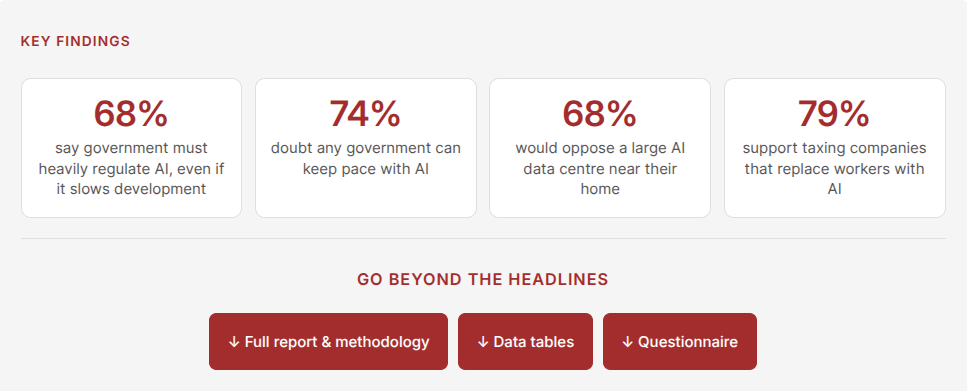
New data from the Angus Reid Institute suggests Canadians overwhelmingly support stronger oversight of artificial intelligence, even as many question whether governments can effectively regulate the rapidly evolving technology. The survey found that 68 percent of respondents believe governments should heavily regulate artificial intelligence and technology companies, even if it slows development, while 74 percent said they do not believe any government is equipped to keep pace with advances in the field.
The British Columbia government’s announcement comes as OpenAI faces a separate lawsuit filed by a Canadian family.
According to a lawsuit filed last month by New Brunswick resident Kristie Carrier, her 24-year-old daughter, Alice Carrier, told ChatGPT she had to die to stop the pain she was feeling. The statement of claim alleges the chatbot appeared to agree, responding: “If someone else told me everything you just did ... I’d probably feel the same thing you’re feeling now: maybe this is just the end.”
Alice Carrier was dead the following day, according to the lawsuit.
The statement of claim alleges ChatGPT initially encouraged Carrier to seek help but later reinforced her suicidal thinking, discouraged the use of crisis helplines and failed to escalate repeated conversations about suicide for human review. Carrier alleges OpenAI failed to implement adequate safeguards for users experiencing mental health crises and instead designed its chatbot to be sycophantic while lacking effective protections for vulnerable users.
There has to be a clear line between protecting user privacy and acting when there is a credible threat to public safety. Figuring out where that line should be is becoming increasingly important as AI becomes part of everyday life.