


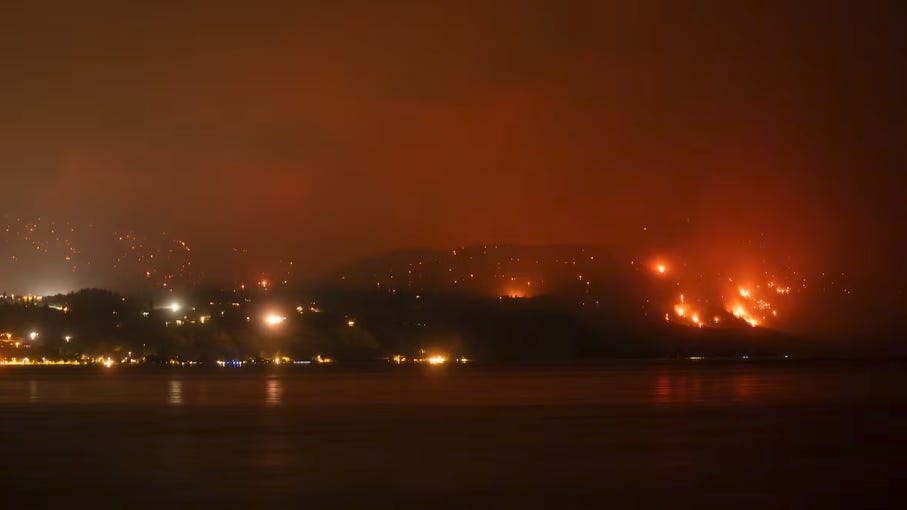
As British Columbia battles another severe wildfire season, the province’s forest industry is already struggling with a problem the BC NDP promised to address nearly two years ago: getting enough economically viable timber to mills.
The province has not yet published an assessment of how much merchantable timber has been affected by the 2026 fires. But previous major fire seasons have prompted salvage efforts and special Ministry of Forests assessments of their effects on future timber supply—this time as major pulp operations are closing or going idle.
Domtar announced Thursday that it will indefinitely idle its Howe Sound pulp mill and Bayview Fibre chipping facility in Port Mellon, affecting approximately 400 employees. The company cited reduced Asian demand, persistently poor global pulp prices and a decline in affordable domestic fibre.
That follows Canfor’s July decision to permanently close its Northwood pulp mill in Prince George late in the fourth quarter of 2026, directly affecting approximately 300 employees. Canfor also cited persistent challenges accessing fibre alongside oversupply and downward pressure in global pulp markets.
BC continues to be in a state of provincial emergency declared August 8 because of regional wildfires, with wildfire evacuation information active for communities across several parts of the province.
The severity of the season was not entirely unexpected. In its June seasonal outlook, the BC Wildfire Service warned that long-term precipitation deficits, low snowpack in parts of the province and above-average spring temperatures had contributed to elevated drought conditions. BCWS forecast vigorous and difficult-to-control fires through the Central and Southern Interior during the July-August peak.
The Ministry of Forests has produced special assessments examining the effects of the 2017, 2018, 2021, 2023 and 2024 wildfire seasons on forests and timber supply. Its most recent assessment examined both 2024 losses and the cumulative effects of major fires since 2017. No comparable assessment of the 2026 season has yet been published.
The underlying fibre problem predates this summer.
When Coastal Front examined forestry policy during the 2024 provincial election, mill closures and declining timber availability were already prominent concerns. The BC NDP promised to increase fibre security, review BC Timber Sales and the stumpage system, and work toward an annual harvest of 45 million cubic metres.
That objective survived the election. Forests Minister Ravi Parmar told the legislature last year that his mandate included enabling a sustainable timber-harvesting land base capable of supporting a 45-million-cubic-metre harvest.
Budget 2026, however, projects Crown-land harvest volumes averaging roughly 29 million cubic metres annually over its three-year fiscal plan. Because that figure specifically covers Crown-land harvesting while the 45-million objective is expressed more generally, they are not necessarily identical accounting measures.
Still, the BC Council of Forest Industries criticized the 29-million-cubic-metre forecast in February, saying the sector’s immediate survival depended on increasing harvest levels through predictable and economic access to wood. The organization has called for the province to work toward the 45-million-cubic-metre annual objective.
Criticism has also come from the independent Provincial Forestry Advisory Council.
In its February final report, the council concluded that BC’s forest-management system is failing to meet a range of needs, including those of communities, First Nations, businesses and the environment. It said small, incremental reforms were not enough, pointing to outdated systems, limited access to trusted public data and decades of layered rules and centralized decision-making that have left the system without the predictability and flexibility required by current economic and ecological conditions.
The provincial government acknowledges the fibre problem. Budget 2026 identifies reduced economic fibre supply and sustained international tariffs as significant challenges for the sector.
The province has responded with measures it says will increase fibre supply, though their full impact has yet to be demonstrated.
In March, the government introduced legislative amendments expanding activities available through BC Timber Sales. It estimates the changes could increase fibre supply by as much as 800,000 cubic metres.
That includes new streamlined salvage licences intended to speed harvesting of trees damaged by wildfire and other natural disturbances. The province estimates those licences could deliver up to an additional 500,000 cubic metres of fibre to market.
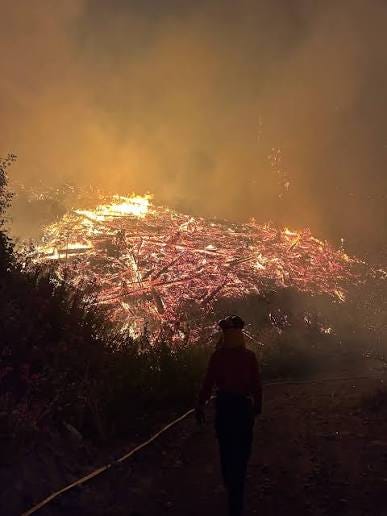
Wildfire can create short-term salvage opportunities because some burned timber remains commercially usable. But severe fires can also damage merchantable timber that would otherwise contribute to future harvests, with wildfire losses considered in provincial timber-supply assessments. The 2024 assessment, for example, found tens of millions of cubic metres of timber within the timber harvesting land base inside that year’s fire perimeters, including both burned and surviving volume.
How much the 2026 fires have added to those pressures has not yet been publicly assessed.
What is already established is that BC entered this fire season with one of the major forestry challenges identified during the last election unresolved: securing enough economically viable wood to support mills and forestry communities.
Now two major pulp operations have announced closures or indefinite idling within little more than a month, with both companies citing fibre availability among the factors behind their decisions. At the same time, another severe fire season is burning through a timber base the province has repeatedly had to reassess following previous wildfire years.