


An effort to repeal British Columbia’s Declaration on the Rights of Indigenous Peoples Act is set to proceed after Elections BC granted in-principle approval to an initiative petition application.
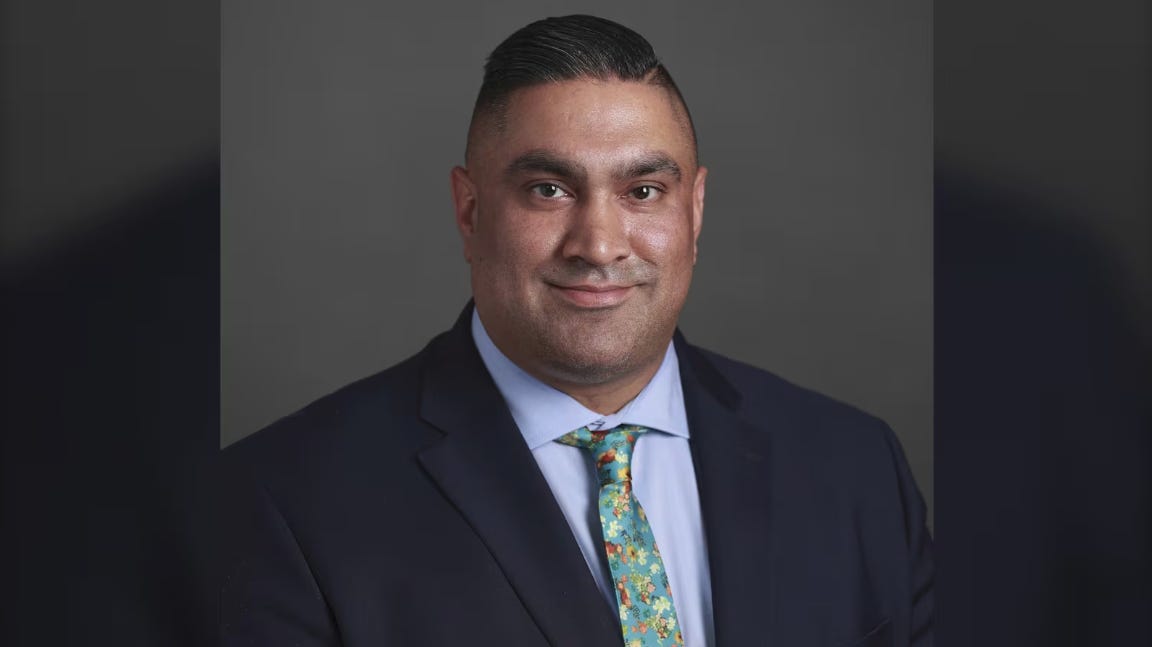
The initiative is being led by Harman Bhangu, the BC Conservative MLA for Langley–Abbotsford and the party’s transportation critic.
To succeed, the campaign must obtain signatures from at least one in ten registered voters in every one of BC’s 93 electoral districts.
Elections BC said in its August 27 announcement that the petition will be issued to Bhangu on October 26 and that completed signature sheets must be submitted by January 25, 2027.
Reaching the signature threshold would not itself repeal DRIPA.
A successful petition would be referred to a legislative committee, which would review the proposed legislation and either recommend that the draft bill be introduced or refer the petition and bill for a province-wide initiative vote.
The initiative process is non-binding, meaning repeal would still ultimately require the proposed legislation to move through the legislative process.
Chief Electoral Officer Shipra Verma approved the application after determining that its subject matter falls within the jurisdiction of the legislature and that the proposed repeal bill is clear and unambiguous.
The proposed bill is two sentences long and states that DRIPA would be repealed upon royal assent.
Bhangu has framed the petition as an opportunity for British Columbians to challenge the legislation directly after months of uncertainty over the government’s plans for DRIPA.
BC Conservative Leader Kerry-Lynne Findlay has also endorsed the campaign, urging British Columbians concerned about property, fairness, jobs and the province’s future to sign the petition.
The provincial government has strongly opposed the repeal effort.
Indigenous Relations and Reconciliation Minister Spencer Chandra-Herbert said respecting the rights of First Nations is important to maintaining unity and argued that repealing DRIPA would result in job losses and broader economic disruption.
The petition follows months of political and legal controversy surrounding legislation that received unanimous support in the BC legislature when it passed in 2019.
DRIPA established a provincial framework for implementing the United Nations Declaration on the Rights of Indigenous Peoples and bringing BC laws into alignment with the declaration.
When the legislation was introduced, the provincial government argued that reconciliation and economic certainty could advance together, saying the new framework would create greater certainty for investment.
Business and public opposition to DRIPA has grown
That promise has since become a major focus of criticism from parts of the business community.
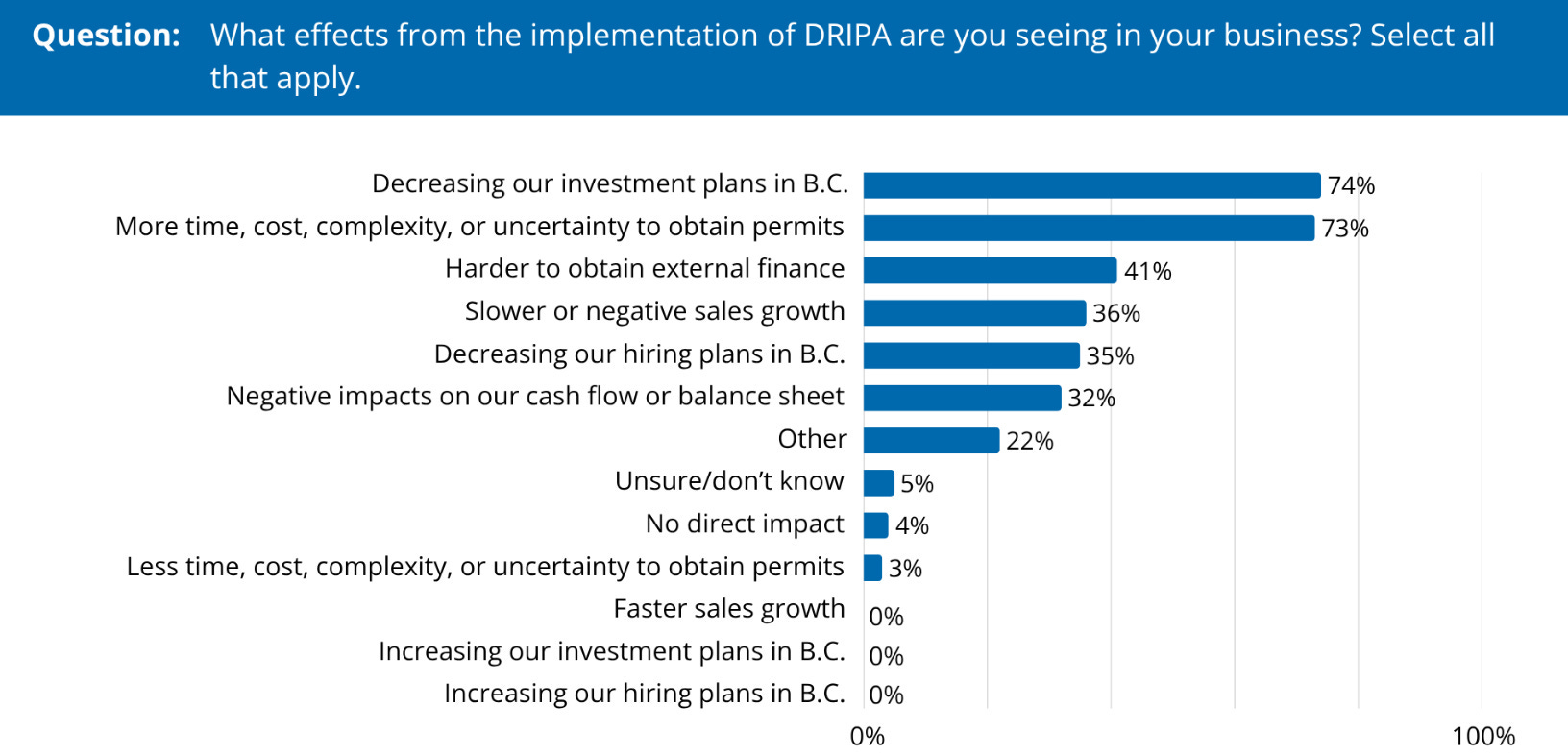
A Business Council of British Columbia member survey released in May found 98 percent of respondents did not believe DRIPA was living up to its original promise of creating investment certainty.
Among those surveyed, 74 percent reported decreasing investment plans in BC, while 73 percent cited increased time, cost, complexity or uncertainty in permitting.
The results contrasted with the optimism BCBC expressed when the legislation was introduced in 2019, when the organization said its members saw long-term potential in the province’s UNDRIP legislation while stressing the need for clarity and certainty during implementation.
Polling earlier this year also suggested substantial public support for repeal.
An Angus Reid Institute poll released May 5 found 47 percent of British Columbians surveyed supported repealing DRIPA.
The same poll found 51 percent believed BC’s economy would be worse off under DRIPA in the future, while 10 percent believed it would be better off.
Gitxaala ruling intensified the political fight
The political dispute intensified following a December 2025 BC Court of Appeal decision involving the province’s mineral claim system.
In the Gitxaala decision, the court found the mineral claim regime inconsistent with UNDRIP, escalating debate over the legal effect of DRIPA and how the province’s laws must interact with the UN declaration.
Premier David Eby subsequently argued that the ruling exposed the province to significant legal risk. According to Eby, more than 20 lawsuits involving the province had been launched or amended following the decision.
His government initially pursued changes to DRIPA and later proposed suspending parts of the legislation for up to three years while the province sought to take the legal dispute to the Supreme Court of Canada.
The proposal drew strong opposition from First Nations leaders.
The First Nations Leadership Council rejected Eby’s characterization of the legal situation, calling his arguments misleading and wrong and arguing that attempts to unilaterally weaken DRIPA were themselves contributing to uncertainty.
After opposition from First Nations leaders and a failure to secure full support within his caucus, Eby abandoned the proposed spring changes and said the government would continue working with First Nations toward a possible solution.
The repeal petition now creates a separate route through BC’s initiative process for opponents of the legislation.
That process has proven difficult to complete successfully.
Elections BC says 14 initiative petition applications have been approved since the Recall and Initiative Act came into force in 1995. Only one—the 2010 initiative opposing the harmonized sales tax—ultimately succeeded.
Bhangu’s campaign will therefore need to clear a demanding threshold: obtaining the required level of support not simply across the province as a whole, but separately in every electoral district.
If it does, the petition and proposed repeal bill will move to the next stage of the legislative initiative process, bringing the future of DRIPA back before provincial decision-makers after months of unresolved debate over the law’s legal, economic and political consequences.