


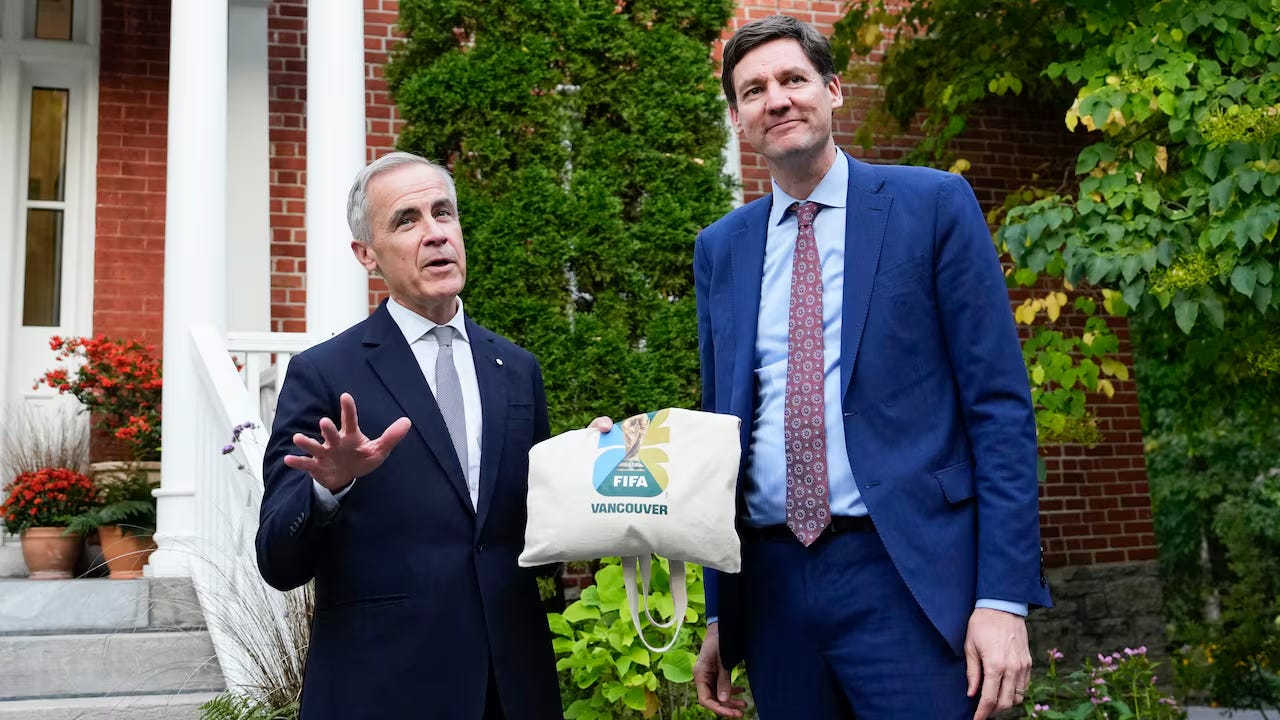
Last Thursday, the federal Liberal government and the BC provincial NDP government announced the Canada-British Columbia Cooperative Prosperity Agreement. This agreement is a multi-billion-dollar one that has major investment from the federal government into the province’s infrastructure, according to the press release.
The agreement covered many sectors and projects in BC, but chief amongst them were several environmental policy agreements. The partnership will seek to establish that the provincial government will be compensated for environmental risk for any future pipeline projects imposed on the province. It also ensures that the BC NDP can reject any pipeline proposal from the neighbouring province of Alberta.
Under the agreement as well, the North Shore oil tanker ban will be fully maintained without further modification, which will also prevent any pipeline from being built out to there.
“This deal will deliver faster commutes as we build critical infrastructure, less pollution as we power growth with clean electricity, and the kind of shared prosperity that funds strong public services,” said BC Premier David Eby. “I want to thank the Prime Minister for recognizing the key role B.C. is playing in building a stronger, more independent Canada.”
However, the news about the partnership comes at the same time that Prime Minister Mark Carney and Alberta Premier Danielle Smith stood together to announce a new proposed pipeline that would follow the path of the Trans Mountain pipeline to the Roberts Bank terminal in Delta, BC.
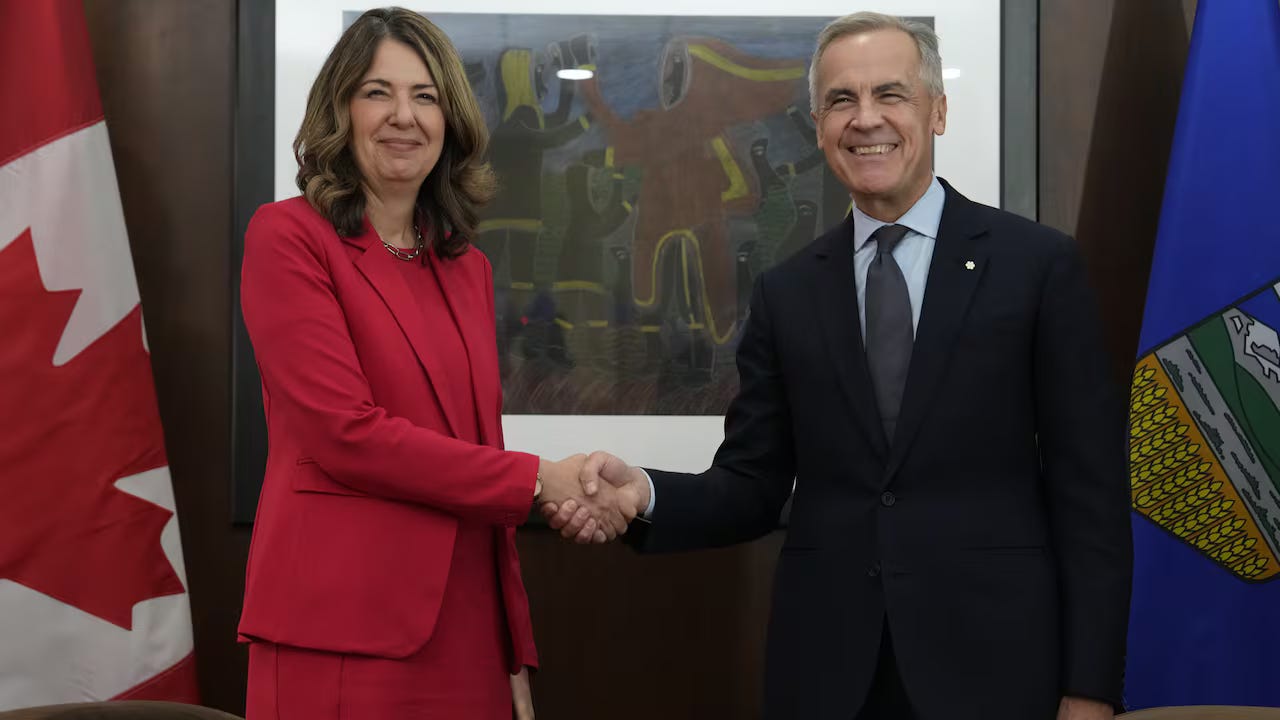
Professor Kathryn Harrison, from the UBC Department of Political Science, told Coastal Front that this reflects an approach from Prime Minister Mark Carney’s government that is known as “cooperative federalism.” “Basically, instead of telling the provinces, ‘this is what we’re going to do unless you do it first,’” she said, the federal government has instead opted to negotiate deals, province by province. “In many ways, it’s brokerage politics.”
Harrison pointed out that Carney’s government is more committed to a federal-provincial consensus than the previous Trudeau administration, whose environmental policies were unfavoured by provinces like Alberta.
Criticism
The federal government’s Major Projects Office received a submission from Alberta’s government saying that the project would cost between $35.2 billion and $43.7 billion, including contingency plans. This does not include escalation and allowance for funds used during construction. That same construction would start as early as 2027 and finish by 2034.
Smith and the project submission were vague on how much taxpayers would need to pay for this project. The Alberta Petroleum Marketing Commission, the federally-owned Trans Mountain Corporation, and the Alberta-based Pembina Pipeline Corporation are in partnership for this project.
“It’s noteworthy that at the press conference, Danielle Smith and Mark Carney didn’t seem to know which [dollar amounts] they said they were going to contribute equally, but no dollar figures were discussed,” remarked Harrison.
Carney stated that up to $10 billion in funding could be provided for Robert’s Bank Terminal 2— a superport where the pipeline would end, which is far above the projected cost for the superport in the submission.
Harrison noted that Carney’s government wants “to expand oil and gas production for export, which will increase Canada’s emissions at the same time that the policies to reduce those emissions are being weakened.” The government has weakened the reach of environmental protections like the Impact Assessment Act, Navigable Waters Protection Act, and the Species at Risk Act, under the Building Canada Act introduced by the government.
Ironically, this announcement came on the same day, hours after Carney stood next to Eby to announce the Canada--British Columbia Cooperative Prosperity Agreement. The premier conceded that BC will not challenge the federally approved pipeline in court.
“Don’t expect me or members of my government caucus to say we like this project,” he told CBC News.
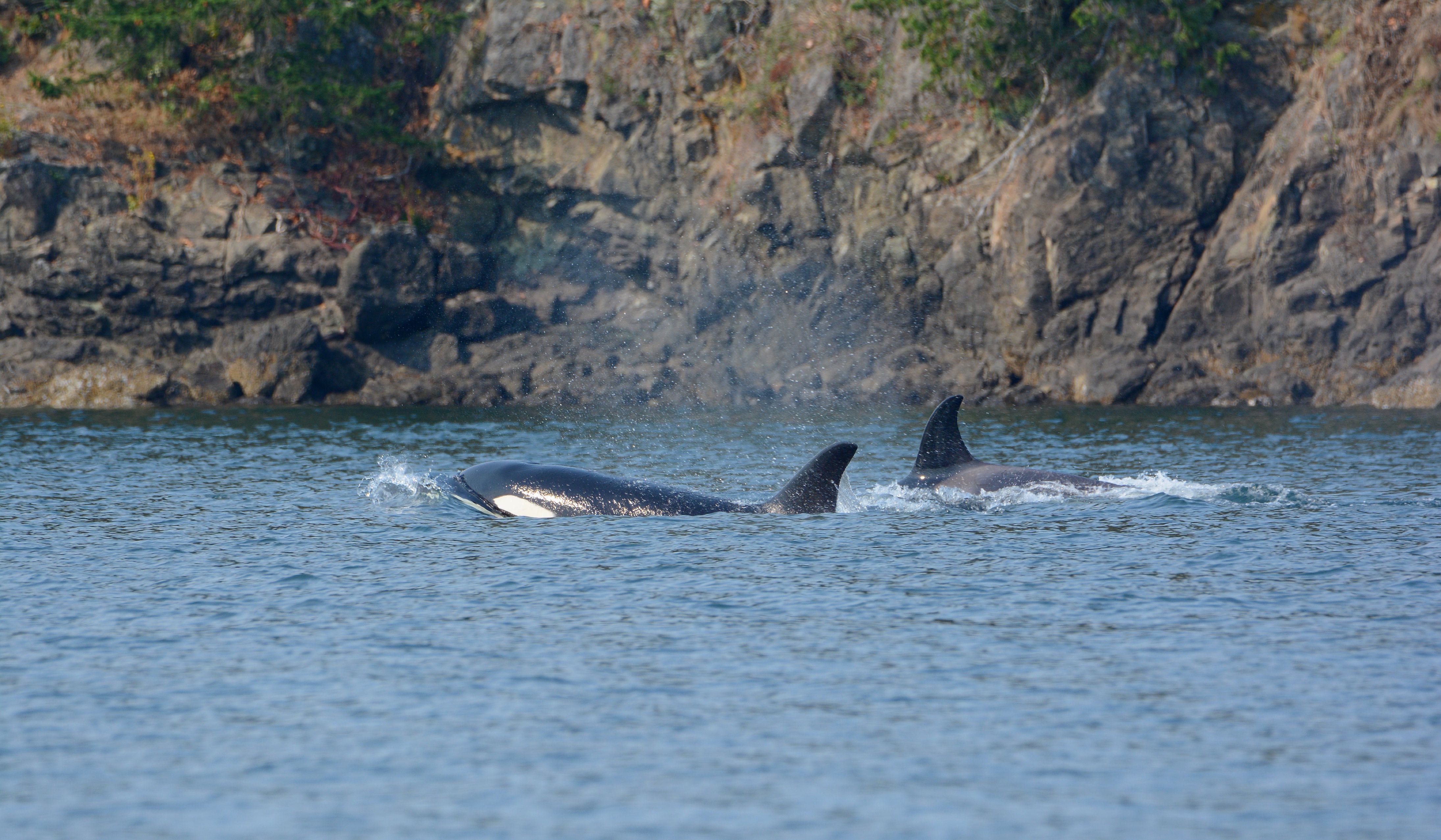
The move has sparked criticism from environmental groups like the Wilderness Committee, which expresses concern about how this will affect the ecosystem and pollution levels of the Salish Sea, adjacent to where the pipeline would deliver oil to tankers. The organization claims it would push the regional subspecies of orca closer to extinction.
“Premier David Eby said he will ensure British Columbians are compensated for the environmental damage of another pipeline, but there is no compensation for the extinction of the southern resident orcas,” said Conservation and Policy Campaigner Lucero González.
“At a time when people across the country are suffering in extreme heat, wildfire evacuations and devastating floods, pursuing the expansion of Canada’s most polluting industry is utterly despicable,” said Associate Director Torrance Coste. “In the fight against climate change, Prime Minister Carney and Premier Eby are issuing their surrender, and resigning us to a future of ecological and economic decline.”
Harrison points out that over the past decade, we’ve seen a “really precipitous decline in the cost of producing renewable electricity with wind and solar. Complementing that, a rapid decline in the cost of energy storage with batteries. That’s important given the intermittency of renewable electricity and the increasing availability globally of low-cost Chinese EVs.”
She poses this question of why we aren’t adopting these models at a time when the global price of oil is in extreme fluctuation due to the ongoing hostilities between the US and Iran in the Strait of Hormuz.
Harrison believes that the government is doing this to diversify our national exports in addition to maintaining federal-provincial regulations. This diversification is due to the recent unreliability in trade with the United States, which has historically been a dominant partner in that area.
In a video titled “Forward Guidance: Canada’s Energy Future,” Carney announces that Canada’s greenhouse gas emissions are expected to go up in the remaining decade. In it, he admits that increasing oil and gas production is a “short-term goal.”
As for Eby and the NDP, Harrison points out how the province has shifted from meeting its 2030 climate goal plans, in a change of direction for the party, including amending the Zero Emission Vehicles Act.
Further details
Other infrastructure projects have also been highlighted through this partnership between governments.
The agreement includes figures of up to $3 billion toward the cost of the Fraser River Tunnel Project, as well as commitments to the Red Chris mine expansion and the North Coast Transmission Line (NCTL), infrastructure for the critical minerals sector. Support for NCTL will result in a $3.9 billion net benefit to ratepayers, according to the provincial government.
The agreement will also see more than $88 million in proposed major projects reaching a final investment decision in the next three years, with these estimates coming from both governments.
The federal government has also promised to commit a maximum of $3 billion to the capital costs of the George Massey Tunnel Replacement Project. It has been recently announced that the project costs have ballooned to $8.5 billion by the provincial government, doubled from $4.15 billion previously.
While there isn’t a timeline of how these changes will be implemented, Harrison points out how a Memorandum of Understanding between the federal government and Alberta’s government has an October 1, 2026, deadline for the federal government to advance the pipeline. She notes that this deadline is before the controversial October 19 referendum on whether Alberta should separate from Canada, amongst other issues.
It’s encouraging to see Ottawa and BC working together on major infrastructure and economic priorities. At the same time, balancing expanded energy exports with long-term environmental commitments will be a real test of this partnership. If both governments can find that balance, the agreement could become an important model for federal-provincial cooperation.