


Foreign Affairs Minister Anita Anand used a July 23 visit to Manila to announce roughly $10.8 million in new Canadian spending across Southeast Asia, the wider Asia-Pacific region, and Africa, as the Carney government continues expanding Ottawa’s financial and strategic presence abroad.
The funding was announced while Anand attended meetings with the Association of Southeast Asian Nations, better known as ASEAN, and the ASEAN Regional Forum. It will supposedly support programs involving money laundering, terrorist financing, child exploitation, biological weapons, migrant workers and gender equality.
The announcement was framed as part of Canada’s deepening relationship with ASEAN, which Global Affairs Canada says was the country’s fifth-largest merchandise trading partner in 2025.
However, Ottawa did not offer information about what measurable economic or strategic return Canadians should expect.
Where the money is going
The largest portion of the funding is a $4.5-million project intended to address what Global Affairs called “significant biological proliferation vulnerabilities” in the Asia-Pacific region and Africa.
The project will support implementation of the Biological and Toxin Weapons Convention and expand biosecurity capacity across ASEAN. Global Affairs did not identify the countries that will receive the funding, provide a country-by-country breakdown, or explain how much will be spent in Africa rather than Asia.
Another $3.6 million will go toward three initiatives involving money laundering and terrorist financing.
That includes $217,000 for the Lao People’s Democratic Republic to help it fulfill an action plan developed by the Financial Action Task Force. The funding will be provided through the Institute for Legal Support and Technical Assistance.
A further $2.4 million will be provided to the Asia/Pacific Group on Money Laundering to expand political engagement, regional coordination and the capacity of member countries to implement anti-money-laundering policies.
The World Bank will receive another $1-million top-up to support similar work through the same organization.
Anand also announced $1.7 million for a United Nations Office on Drugs and Crime initiative in the Philippines. The program is intended to protect children from sexual exploitation and recruitment by criminal, armed, and terrorist groups.
Another $455,000 will be distributed through the ASEAN-Canada Plan of Action Trust Fund to promote what the government calls the fair and ethical recruitment of migrant workers. The project will involve the Philippines’ Department of Migrant Workers and Immigration, Refugees and Citizenship Canada.
Almost $500,000 will go toward gender equality and women’s empowerment initiatives, including support for the fourth ASEAN Women Leaders’ Summit.
Together, the commitments amount to approximately $10.8 million.
The release does not set out measurable performance targets, projected Canadian economic benefits or a timeline for publicly reporting the results.
More spending in the Philippines
The package follows a separate $2-million commitment announced earlier in July, when Prime Minister Mark Carney hosted Philippine President Ferdinand Marcos Jr. in Vancouver.
That funding will support technical assistance and efforts to attract investment into the Luzon Economic Corridor, an infrastructure initiative involving transportation, clean energy, semiconductor supply chains, and agribusiness in the Philippines.
Carney and Marcos also elevated relations between the two countries to a strategic partnership and highlighted growing cooperation in defence, energy, mining, infrastructure and migration. The two governments are also negotiating a bilateral free-trade agreement.
The latest spending therefore comes as Ottawa is attempting to position the Philippines as both an economic and security partner.
Global Affairs noted that Canada-Philippines merchandise trade reached $3.4 billion in 2025. Canadian exports accounted for $1.1 billion, while imports from the Philippines totalled $2.3 billion.
The government also highlighted the broader Canada-ASEAN trading relationship, which reached $52.4 billion in 2025.
These figures demonstrate the region’s economic importance, but the government did not directly connect the newly announced funding to Canadian contracts, export commitments, or improved market access.
Continuity behind the reset
The spending also reveals the degree of continuity behind Carney’s shifting approach to the Indo-Pacific.
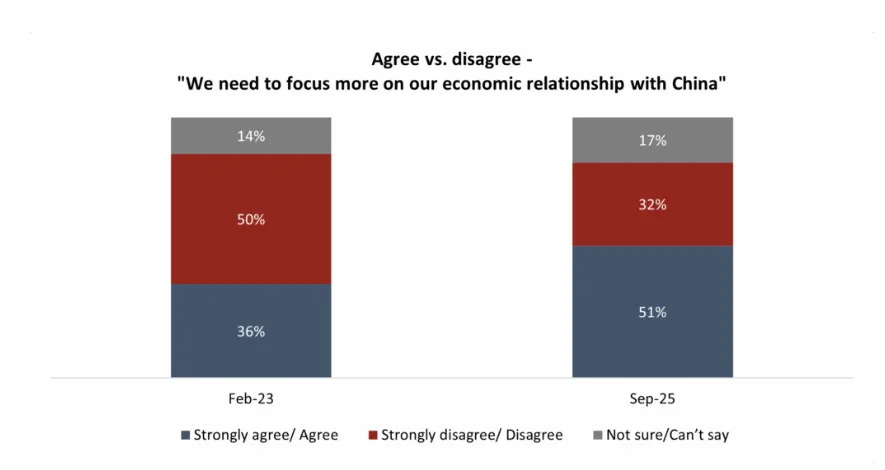
Last October, Carney met with Chinese President Xi Jinping and promised to “rebuild ties” after years of deteriorating relations. His government described the meeting as a turning point.
The change marked a departure from the confrontational language of Canada’s 2022 Indo-Pacific Strategy, which described China as an “increasingly disruptive global power.”
But while Ottawa has softened its rhetoric toward Beijing, it has not abandoned the broader structure of the strategy.
The 2022 plan committed $2.3 billion to an expanded Canadian presence in the Indo-Pacific, including military deployments, cyber security, trade promotion, development assistance, climate programs and support for regional institutions. It also promised increased diplomatic, economic, military and technical support for countries across the region.
Anand’s visit continued that approach.
Canada will extend its co-chairship of an ASEAN Regional Forum working group on cyber security alongside India and Indonesia. Anand also discussed expanded defence cooperation and announced that Canada will host a meeting of regional defence universities, colleges, and institutions in Victoria this October.
The result is a dual approach. Carney is attempting to repair economic relations with China while continuing to build the diplomatic, financial, and security architecture created partly in response to China’s regional influence.
Rather than replacing the 2022 strategy, the government appears to be adjusting its language while preserving most of its spending and institutional commitments.
The question of priorities
The individual issues identified by the government are not insignificant.
Money laundering, child exploitation, human trafficking, terrorism, and biological weapons are legitimate international concerns. The question is how far Canadian taxpayers’ responsibility extends, how funding decisions are prioritized and what evidence of success the public should expect.
Several of the new projects will be administered through international organizations, regional bodies, and trust funds. Their goals are broadly defined, while the direct benefits to Canadians are less apparent.
Global Affairs provided the names of the recipients and descriptions of the programs. It did not provide a detailed explanation of why these initiatives represent the best use of Canadian funds, what outcomes would constitute success or what happens if those outcomes are not achieved.
That omission is particularly notable because the spending is being presented as part of a strategy intended to strengthen Canadian prosperity and economic security.
Carney’s government says it is pursuing a pragmatic Indo-Pacific policy focused on trade, investment, and diversification. But in the latest announcement, the spending commitments are concrete while the benefits to Canadians remain largely theoretical.
The government’s diplomatic language toward the region may be changing. The flow of Canadian public money abroad is not.
International cooperation has its place, but it’s fair to ask how these commitments fit within Canada’s priorities at home and what tangible results Canadians can expect.
Very interesting!