


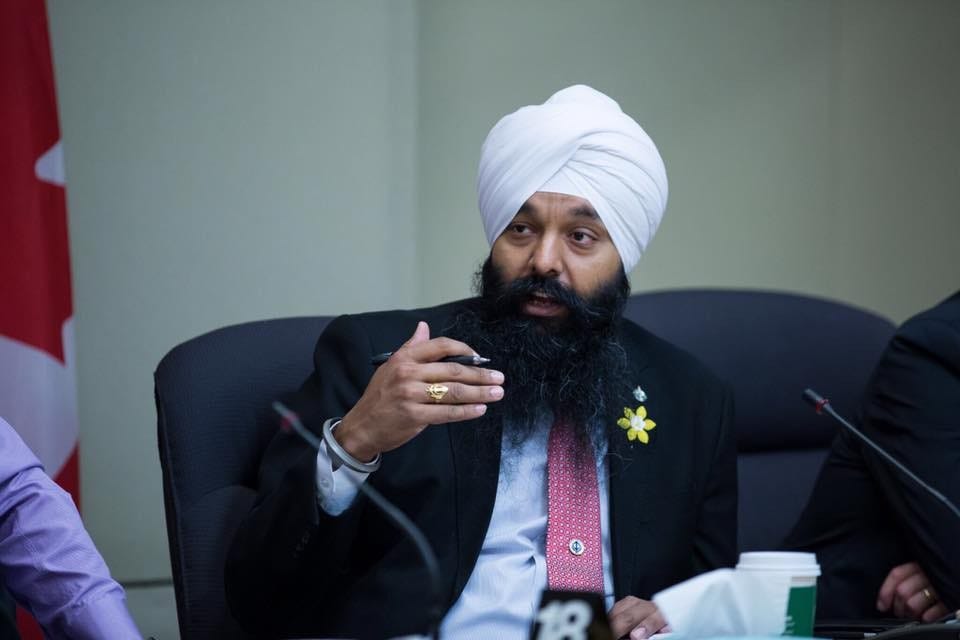
Secretary of State for International Development Randeep Sarai cut the ribbon on Canada’s reopened high commission in Lusaka, Zambia’s capital, on November 9 and announced more than $10.5 million for four new projects.
Separately, FinDev Canada, a federal Crown corporation, has announced a $35-million US loan to Zanaco, one of Zambia’s largest commercial banks. The partly state-owned bank reported in 2024 that it had posted the highest profit in Zambia’s financial industry and the largest dividend in its 55-year history.
None of this is new. Under successive Liberal governments, Global Affairs Canada’s own figures show more than $230 million in Canadian assistance to Zambia since 2019.
Canada cannot afford it
Budget 2026 projects a $62.3-billion deficit this fiscal year. Interest on the federal debt alone will cost Canadians $60.2 billion, rising to $85.5 billion by 2030-31. Ottawa is adding overseas commitments while taxpayers shoulder a growing bill for servicing its debt.
Washington cut back
In May 2025, the United States announced cuts of $50 million US a year in medical aid to Zambia after an investigation uncovered systemic theft of donated medicines, including HIV, tuberculosis and malaria drugs intended to be provided free to the public.
Investigators visited about 2,000 pharmacies and found nearly half were selling medicines and products paid for by U.S. aid. They also found supplies purchased by the Global Fund and other donors being sold commercially.
After more than a year of warnings, the U.S. ambassador said his government could no longer justify continuing the spending without stronger action to protect American taxpayers’ money.
Washington has since signed a new five-year health agreement with Zambia, including $1.52 billion US in planned assistance and commitments to strengthen the tracking of medicines.
Eighteen months after the cuts were announced, Ottawa reopened its high commission in Lusaka and announced more money.


There is no scorecard in the announcement
The government’s announcement lists activities and hoped-for outcomes, but no measurable targets, independent evaluator or mechanism to recover funds if results are not delivered. None of the three largest projects lists a Zambian organization as its lead partner.
The latest funding includes $7.5 million to expand economic opportunities, $2 million to strengthen Zambia’s capital markets, about $824,000 to advance women’s leadership in peacekeeping and security institutions, and nearly $250,000 for electricity-grid planning.
More broadly, roughly two-thirds of Canada’s assistance to Zambia in 2024-25 was delivered through multilateral organizations. The latest announcement gives Canadians paying the bill no clear scorecard for measuring success.
A troubled record
Zambia scored 37 out of 100 on Transparency International’s 2025 Corruption Perceptions Index, below the global average of 42. Canada scored 75.
A forensic audit presented to Zambia’s Parliament in October found 1.4 billion kwacha in contracts awarded over the objections of internal auditors. Some prices were inflated by more than 1,600 per cent, and 4,096 shipments disappeared from the agency’s records. The government has begun overhauling the agency and removing staff.
Zambia’s auditor general also found nearly 627 million kwacha in uncollected mining penalties and 3.56 billion kwacha in outstanding Ministry of Health obligations.
After August’s general election, observers flagged irregularities in the vote count. The runner-up, Brian Mundubile, and his running mate, Makebi Zulu, were subsequently charged with treason.
This is the partner to which Ottawa is sending borrowed money.