


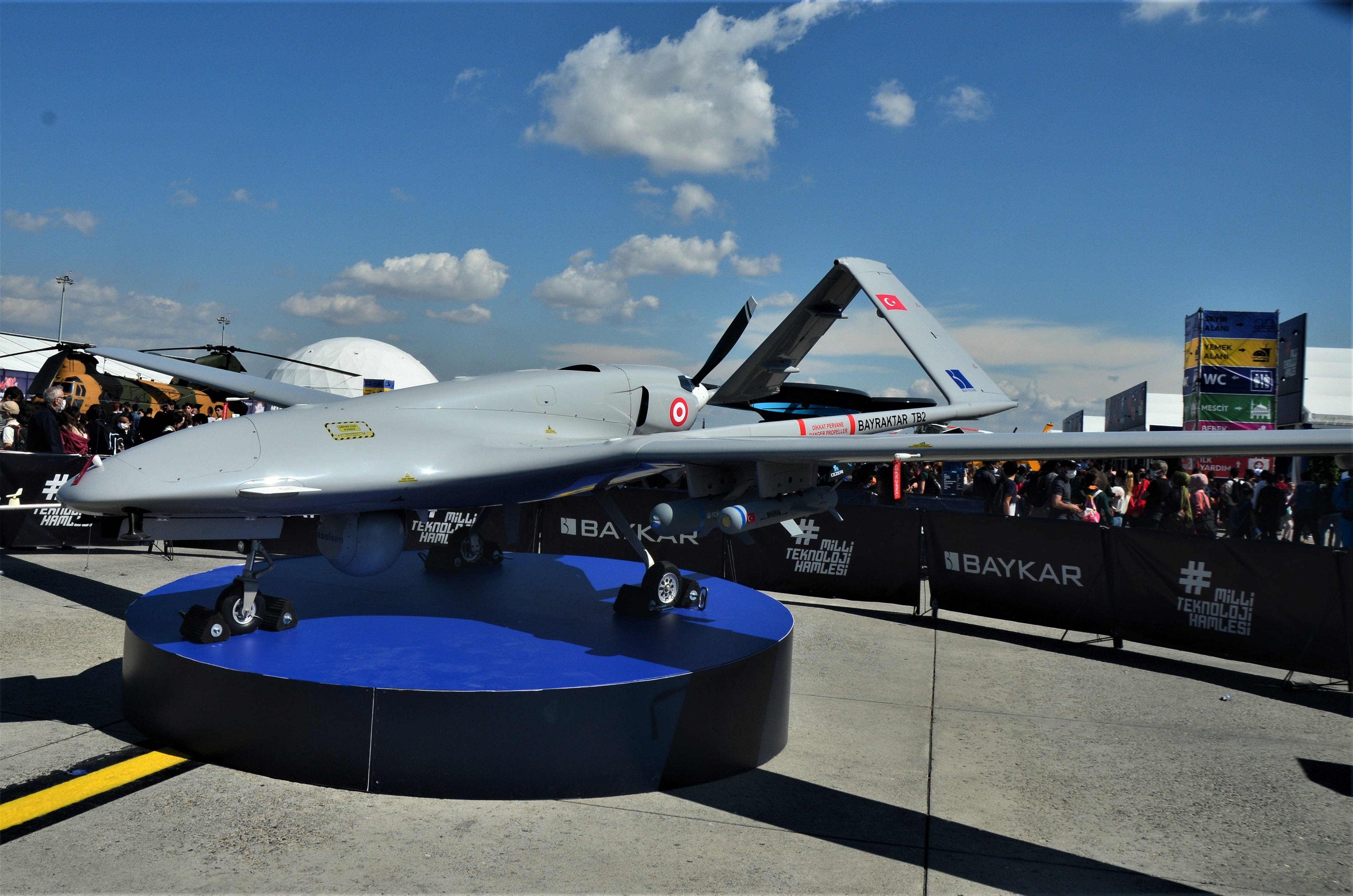

In March 2020, the vice-president of the SSB, Türkiye’s state defence-industry agency, wrote to Canadian officials that sensors made by L3Harris Wescam, of Waterdown, Ont., “are not diverted, re-exported or transferred to any third party for any reason.” Ottawa’s own review later found credible evidence that Turkish-built drones carrying Canadian cameras were used that fall in the war over Nagorno-Karabakh, though it could not confirm a diversion. On October 22, Canada signed a defence-industry agreement with the same agency.
Wescam’s sensors are camera systems. Its MX-series imaging systems support “intelligence, surveillance, reconnaissance and target acquisition missions,” L3Harris said in a 2025 release on sensors for police helicopters. Wescam cameras exported to the Turkish company Baykar were built into its Bayraktar TB2, an armed drone, Global Affairs Canada, the federal foreign ministry, found in the Final report on that review, which covered military export permits to Türkiye.
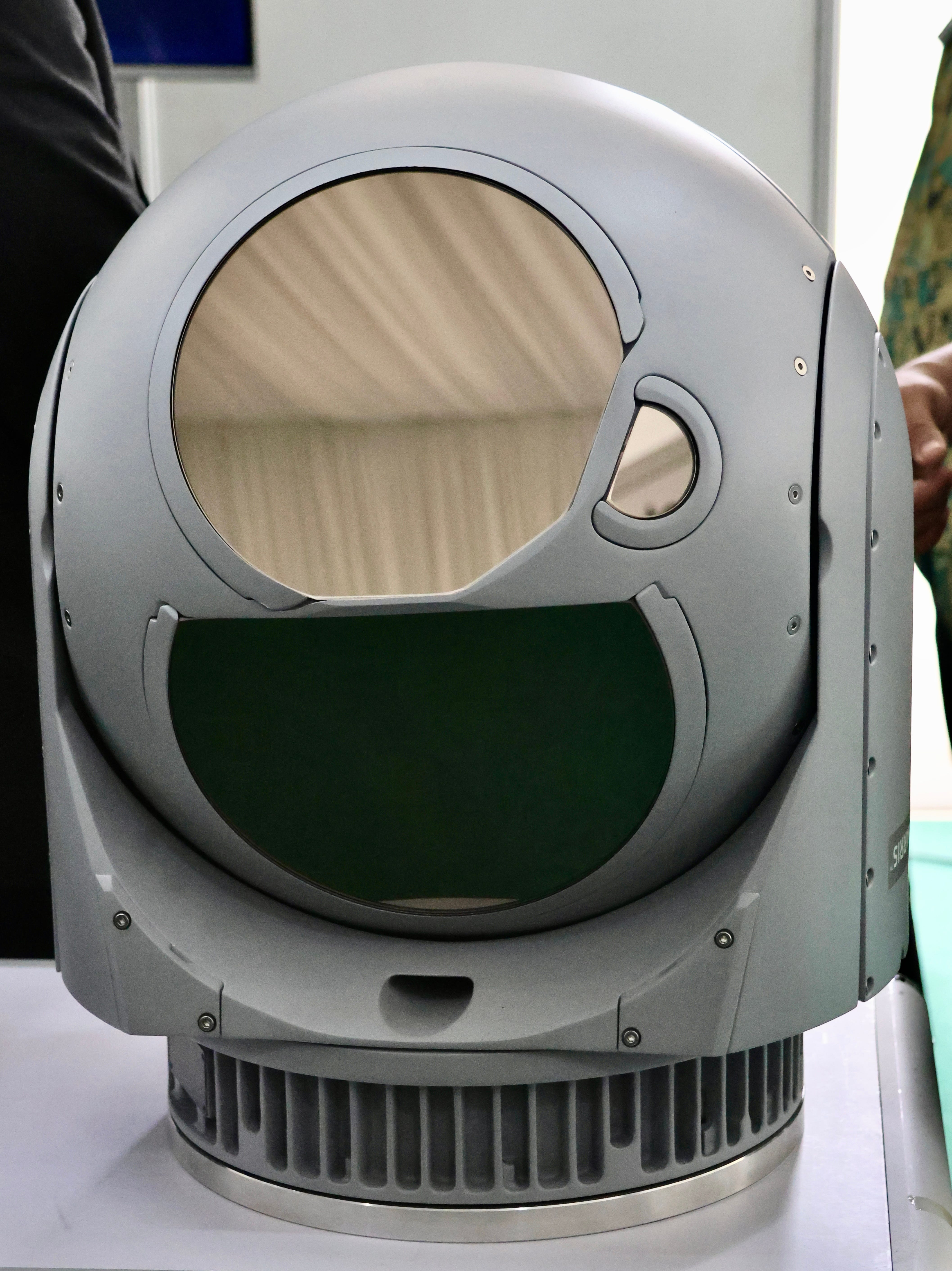

In fall 2020, months after the letters, Azerbaijan and Armenia fought a war over Nagorno-Karabakh, and Canada suspended the relevant permits. The credible evidence, the report said in findings announced in April 2021, concerned Bayraktar TB2 drones “equipped with Canadian sensors.” The alleged transfer of the drones to Azerbaijan came “a mere five months” after the March 2020 letters, the report said, and “No export permits for Canadian sensors were issued for Azerbaijan.”
The report stopped short of a verdict on the letters. The department “is not in a position to confirm the diversion,” it said, though Türkiye’s actions “could be interpreted as being inconsistent” with the March 2020 assurances. It also said “it is not clear” whether those assurances applied to the sensors themselves or to the Turkish-built drones.
Then-foreign minister Marc Garneau was firmer. The use in Nagorno-Karabakh of Canadian technology exported to Türkiye “was not consistent with Canadian foreign policy, nor end-use assurances given by Turkey,” he said in an April 2021 statement announcing the cancellation of the permits suspended in fall 2020.
The evidence
Among the evidence was a serial-number tag on what the report calls “a purported Canadian sensor,” in a photo shared by Armenian defence officials of what they said was the wreckage of a Turkish-made drone. L3Harris Wescam, refraining from comment on the images’ authenticity, told Global Affairs a system with that number was delivered in September 2020 under a permit approved in September 2019, “for the Turkish Naval Forces as the stated end-user,” the report says.
The report noted that Baykar’s catalogue listed Wescam sensors as its exclusive sensor technology, but it treated the company separately from the Turkish government, finding that, “based on the information available to the department, Baykar has not violated any of its end-use assurances.” Separately, the report found credible evidence suggesting that Türkiye had used TB2s, “most likely” equipped with Canadian sensors, in its “Syria-related military and security operations for surveillance and targeting.”
The report’s other conclusions cut the other way. It found “no credible evidence” Azerbaijan used the drones to commit serious violations of humanitarian law, and “no substantial risk” in continued exports. That is the legal test: under section 7.4 of the Export and Import Permits Act, the responsible minister must not issue permits for military exports if, “after considering available mitigating measures,” the minister determines there is a “substantial risk” of harms such as being used to commit “a serious violation of international humanitarian law.” The report also noted that neither Türkiye nor Armenia supplied the information Canada sought.
The 2020 letters
The letters, from the agency the report calls the Presidency of Defense Industries, and elsewhere the SSB, asked Canada to lift the freeze on new permits it imposed in October 2019, after Türkiye’s incursion into northeastern Syria. In April 2020, after a March ceasefire between Türkiye and Russia and a review of “the situation in Syria, regional security and the overall bilateral relationship with Türkiye,” the report says, the department changed its approach: military permit applications would be “presumptively denied,” a notice to exporters said, though each would be reviewed for “exceptional circumstances” that could “justify issuing the permit.”
That July, the Turkish daily Daily Sabah reported that Ismail Demir, then the SSB’s chairman, said the Turkish defence industry would always back Azerbaijan with armed drones, ammunition, missiles and electronic-warfare systems, during Azerbaijan-Armenia border clashes “far from Nagorno-Karabakh.” The Global Affairs report cited the remark among the media reports it reviewed.
The signing
Six years later, Global Affairs concluded a memorandum of understanding, or MOU, on defence-sector partnerships with the same agency, which the joint statement by Prime Minister Mark Carney and Türkiye’s President Recep Tayyip Erdoğan calls the Secretariat of Defence Industries. The MOU “will facilitate the expansion of defence industry partnerships,” the statement says.
Foreign Affairs Minister Anita Anand and SSB head Haluk Görgün signed it, Türkiye’s state-run Anadolu Agency reported in its October 22 story on the day’s signings. Anand said on X she signed a “Memorandum of Understanding on Defence Cooperation”; the SSB’s weekly bulletin and Görgün’s post say, in Turkish, “we signed.” The joint statement and the Prime Minister’s Office release name one new defence MOU.
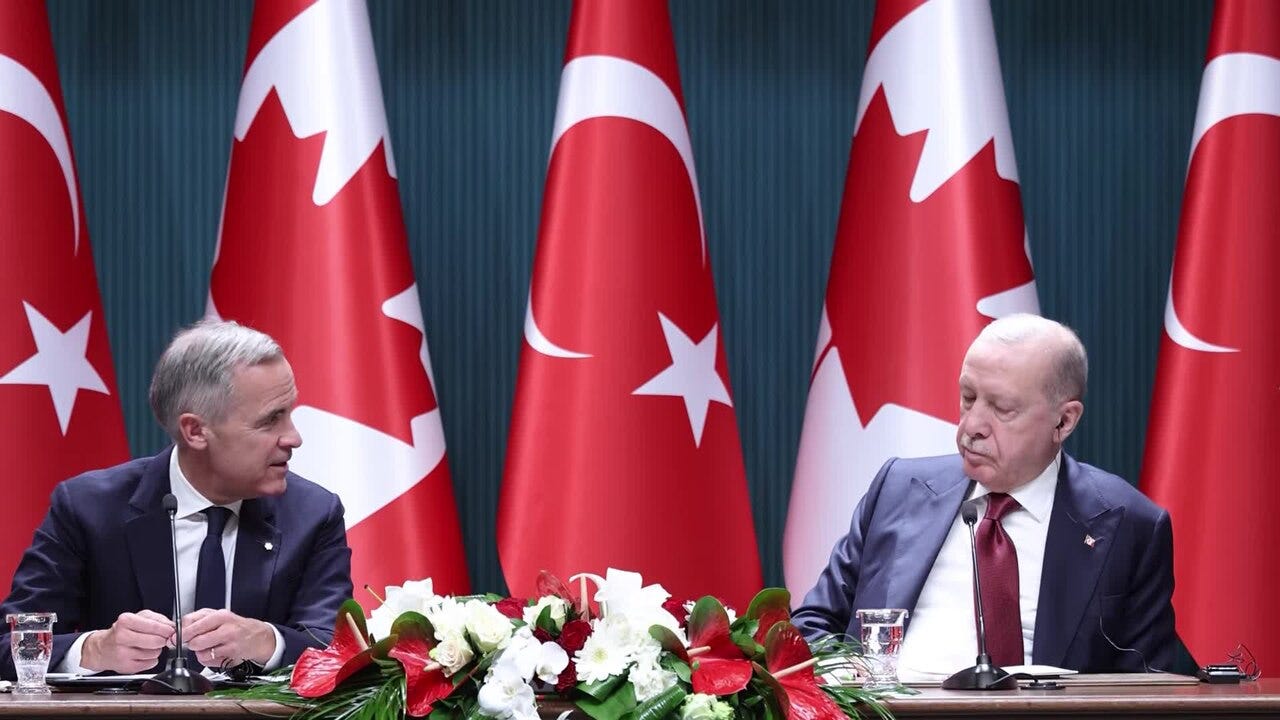
Carney’s meetings with Turkish firms in Istanbul included Sabanci Holding, Calik Holding, drone maker Baykar and arms maker Aselsan, his office said, The Globe and Mail reported.
Anand “raised the importance of respect for human rights,” her department’s readout said. Carney said Canada is “more in need of Turkish expertise in terms of reinforcing what we need to do to protect Canadians and to serve as a full NATO ally at this stage,” Anadolu Agency reported, and that Canada would maintain its export controls and that officials would make clear how those rules apply. He also said permits would be reviewed case by case, CBC News reported: “We have standards, we have rules and we will follow them”.
After the freeze
A January 2024 notice to exporters said the April 2020 policy of presumptive denial “is no longer in place.” When a Turkish government body is the end user, exporters must now “obtain from the importer an end use assurance” that includes “a statement from the government of Türkiye” saying whether items “will be re-exported or transferred” to a country outside the NATO military alliance other than Ukraine, in their original form or “incorporated into a weapons system.” Global Affairs “will take appropriate action should credible evidence be found regarding the misuse” of controlled Canadian goods, the notice says.
None of five official texts — the leaders’ joint statement, the Prime Minister’s Office release, Global Affairs’ readout of Anand’s meeting with Turkish Foreign Minister Hakan Fidan, the SSB’s weekly bulletin and the Turkish Presidency’s Turkish-language release — says whether the MOU itself adds to the end-use requirements in the January 2024 notice.
Exports have continued. In 2025, Türkiye was the seventh-largest non-U.S. destination for Canadian military exports, at $60.8 million; Ottawa issued 17 military permits for Türkiye and denied three applications, one for military items, Global Affairs’ annual report to Parliament on military exports shows.