



(Image courtesy CBC)
British Columbia’s finances took another hit Thursday as Moody’s Ratings downgraded the province’s credit rating, citing what it called a marked deterioration in the government’s finances, including large structural deficits and rising debt — a move expected to increase borrowing costs and add to expenses for taxpayers.
The downgrade comes as the province runs large deficits, takes on significantly more debt, and shows no clear path back to balance.
Moody’s downgraded BC’s long-term issuer and senior unsecured debt ratings to Aa2 from Aa1 and maintained a negative outlook, while affirming the province’s P-1 commercial paper rating. In other words, lenders now see the province as a higher-risk borrower, which typically leads to higher borrowing costs.
The downgrade comes after the province’s February 2026 budget, with Moody’s projecting consolidated deficits of $13.3 billion in 2026-27, $12.2 billion in 2027-28 and $11.4 billion in 2028-29.
Moody’s said the latest budget “confirms a deterioration in long-term fiscal management” and pointed to limited progress and visibility toward balanced budgets, reduced fiscal policy predictability and weaker risk controls.
The agency said continued growth in operating and capital spending, particularly in healthcare, social programs and housing affordability initiatives, is contributing to large, structural deficits. It also said elevated uncertainty tied to global and US trade conditions adds further risk to the fiscal outlook.
Moody’s projected BC’s net direct and indirect debt will rise to $178.5 billion in 2026-27, or 208.7 percent of revenue, and to $230 billion by 2028-29, or 250.7 percent of revenue.
That would mark a sharp increase from an estimated 175.8 percent in 2025-26 and from an average of about 130 percent over the previous five years, shifting BC from one of the lowest debt-burdened provinces among its peers to one of the highest, Moody’s said.
Interest costs are also expected to climb, reaching six percent of revenue in 2026-27 and 7.9 percent in 2028-29, up from an estimated 4.7 percent in 2025-26.
Moody’s said an upgrade is unlikely given the negative outlook. It said the outlook could be stabilized if the province implements a credible plan to slow debt growth and materially reduce projected deficits faster than currently forecast.
The agency said the current fiscal plan points to continuing large deficits and rising debt, and noted a lack of an articulated timeline for a return to balance.
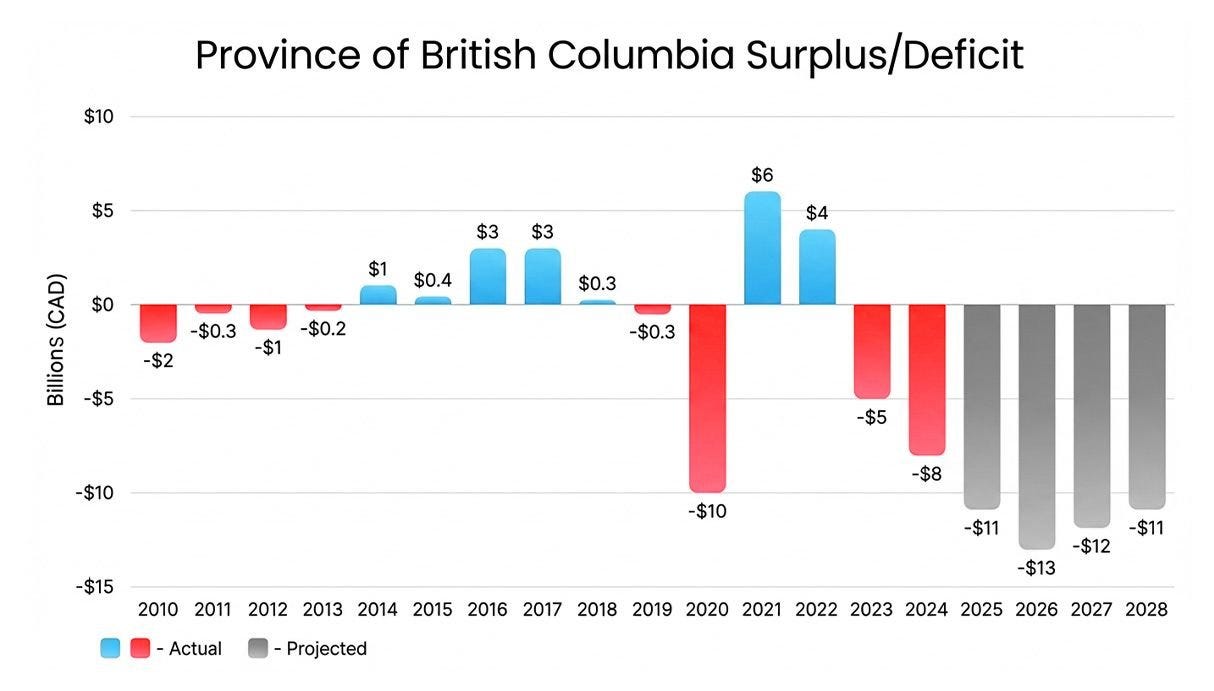
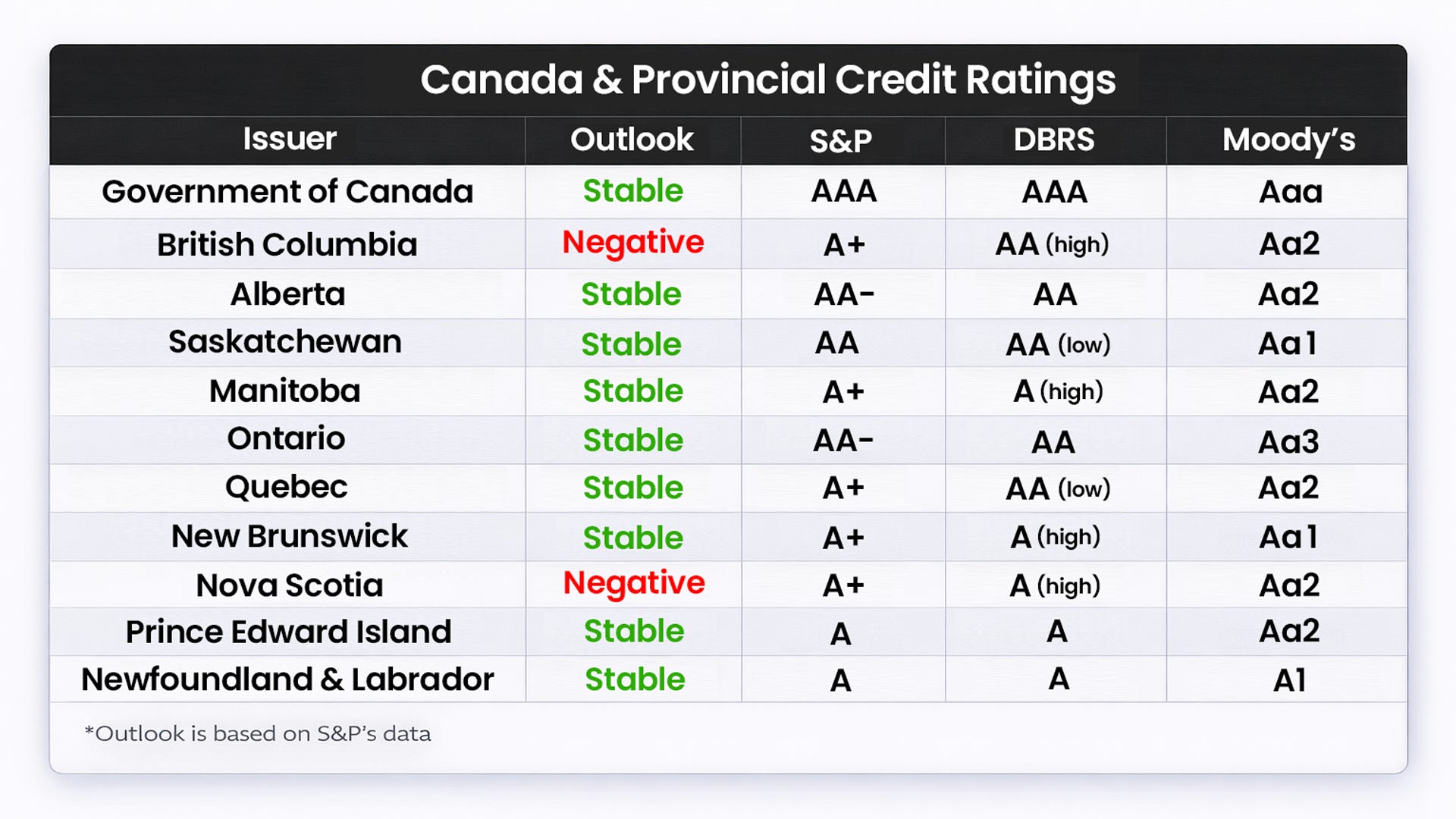
Critics of the government’s fiscal plan say the downgrade reflects a pattern of rising spending and borrowing that is becoming increasingly difficult to sustain.
They point to tax changes in the latest budget, including an income tax increase expected to cost the average family about $150 next year and an expansion of the provincial sales tax to services such as security guards, accountants and engineers. Those measures are expected to generate more than $200 million this year and rise to about $500 million annually in the future.
They also point to projections showing provincial debt per person rising from about $27,000 at the end of 2025-26 to roughly $40,900 by 2028-29, as well as the loss of more than 20,000 jobs last month.
Moody’s said BC continues to benefit from a resilient and diversified economy, strong access to capital markets and a mature institutional framework with significant revenue and expenditure flexibility. Federal health and social transfers account for about 17 percent of total revenue, and liquidity remains adequate, with cash and cash equivalents averaging 9.3 percent of revenue over the next three years.
But Moody’s said those strengths are being offset by rising deficits, increasing leverage and weakening fiscal management.
Taken together, the projections point to a province facing sustained deficits, accelerating debt and rising borrowing costs, with no clear path back to balance.
In a September 2024 interview with Coastal Front, Eby defended the province’s growing deficit and rejected calls to cut spending, arguing that continued investment in infrastructure such as schools, hospitals and transit is necessary to support future growth.
Asked at the time about the province’s credit rating, Eby said maintaining a strong rating is important but must be balanced with “investing in the province’s future.”
The latest downgrade suggests those trade-offs are now weighing more heavily on the province’s finances, and newly-released data from the Angus Reid Institute puts the premier’s performance at a new low.
🫣