

Ottawa storing 21 million expired pandemic PPE items, costing taxpayers millions

Ottawa continues to store millions of expired pandemic supplies, with taxpayers covering the cost.
According to a response to Conservative MP Dave Epp’s Order Paper question Q-780, the federal government still held about 21 million expired pieces of personal protective equipment (PPE) in the National Emergency Strategic Stockpile as of January 31, 2026.
The number is lower than the roughly 64 million expired units officials previously told a House of Commons health committee were in storage at one point. Federal officials say the total changes over time as expired items are recycled or disposed of.
The response states the earlier figure reflected a snapshot of inventory, while the stockpile is now managing about 21 million expired PPE items.
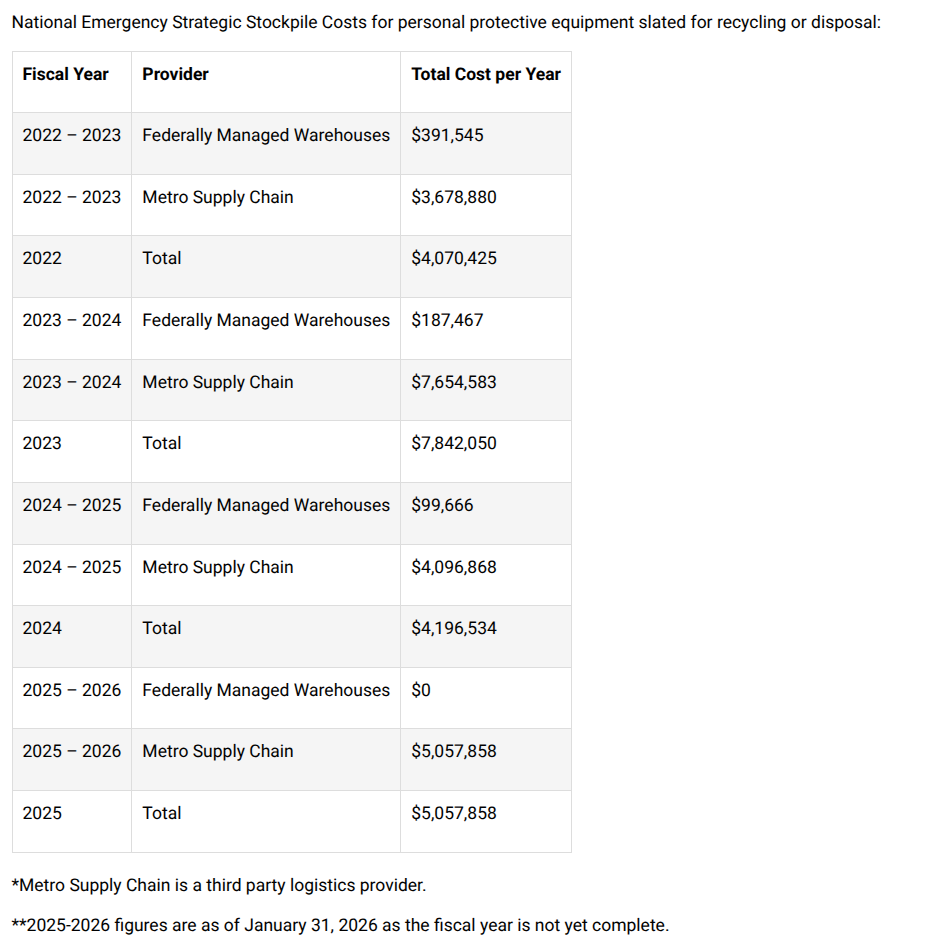
Meanwhile, Ottawa continues to spend millions storing supplies that can no longer be used. Government figures show storage costs of about $4.07 million in 2022-23, $7.84 million in 2023-24, $4.19 million in 2024-25 and $5.06 million so far in 2025-26.
Much of the spending went to logistics contractor Metro Supply Chain, which stores the equipment.
Federal officials say the surplus stems from large pandemic-era purchases. Ottawa acquired more than four billion medical countermeasures to help provinces and territories during COVID-19, distributing over two billion units before demand declined, leaving significant quantities in storage.
Officials say expired medical supplies cannot be used and must eventually be recycled or destroyed.
The written question also asked whether Ottawa had been warned about falsified laboratory reports tied to pandemic PPE contracts. The government said products were quarantined and reviewed whenever quality concerns arose, with inspections, independent testing and regulatory checks conducted before equipment was approved.
Ottawa says it is now working to strengthen domestic supply by maintaining surge capacity and signing long-term agreements with Canadian manufacturers for masks and respirators.
The data shows taxpayers are still paying millions to store pandemic supplies that can no longer be used.
