

Post-pandemic study shows developmental drop in BC kindergarteners
Editor’s Note: An earlier version of this article incorrectly stated that the increase in developmental vulnerability rates found post-pandemic “does not necessarily mean that more children are becoming developmentally vulnerable; rather, screening tools have improved." This was incorrect as the Early Development Instrument (EDI) has been used by Human Early Learning Partnership consistently since 2004. The article has been changed to correct this error.

While the pandemic and its effects on daily life for British Columbians are largely over, the ramifications of it remain with BC’s youth.
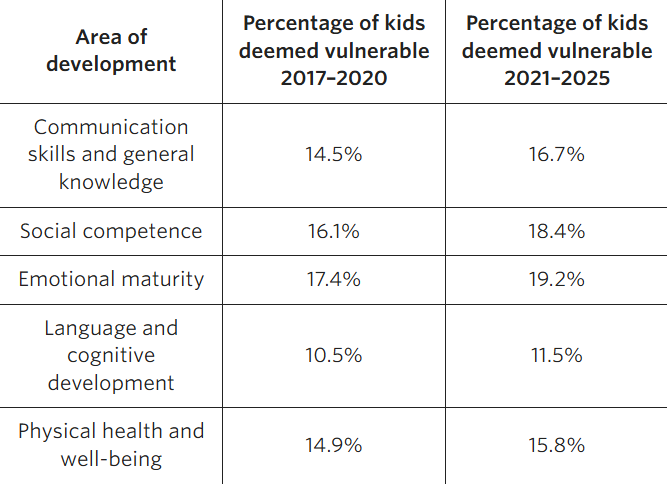
According to a recent study done by the University of British Columbia, titled Early Years Disrupted, the share of BC children in their kindergarten year scoring below established benchmarks in at least one key developmental area rose to 36 percent, compared to about 32 percent before the pandemic.
The study used five areas of development. They were:
Communication skills and general knowledge
Social competence
Emotional maturity
Language and cognitive development
Physical health and well-being
In every category, the share of BC children deemed vulnerable increased. Some rises were modest — such as physical health and well-being, which grew from 15 to 16 percent — while others were more pronounced, including social competence, where vulnerability rose from 16 to 18 percent.
“This is the highest vulnerability rate we have seen since we began collecting this data 24 years ago,” said UBC Professor Dr. Martin Guhn.
It is important to note that rates of developmental vulnerability of BC kindergarten children have increased over time since data collected through the Early Development instrument (EDI) was first publicly reported in 2004. However, the post-pandemic rate of 36% is the highest rate to-date and represents over 12,000 children across the province starting school vulnerable in one or more areas of development important to their future success in school and beyond.
Schools were among the sectors most affected during the pandemic. The Ministry of Education introduced 60-person learning groups, keeping students with a consistent set of classmates throughout the day to limit interactions and reduce potential transmission. Although BC managed to keep case numbers and deaths relatively low compared with many other provinces and jurisdictions, the long-term health effects on children who lived through these lockdown-related policies are still not fully understood.
Perhaps they won’t be for years and decades to come.