

The rise of Canada’s defence–finance complex
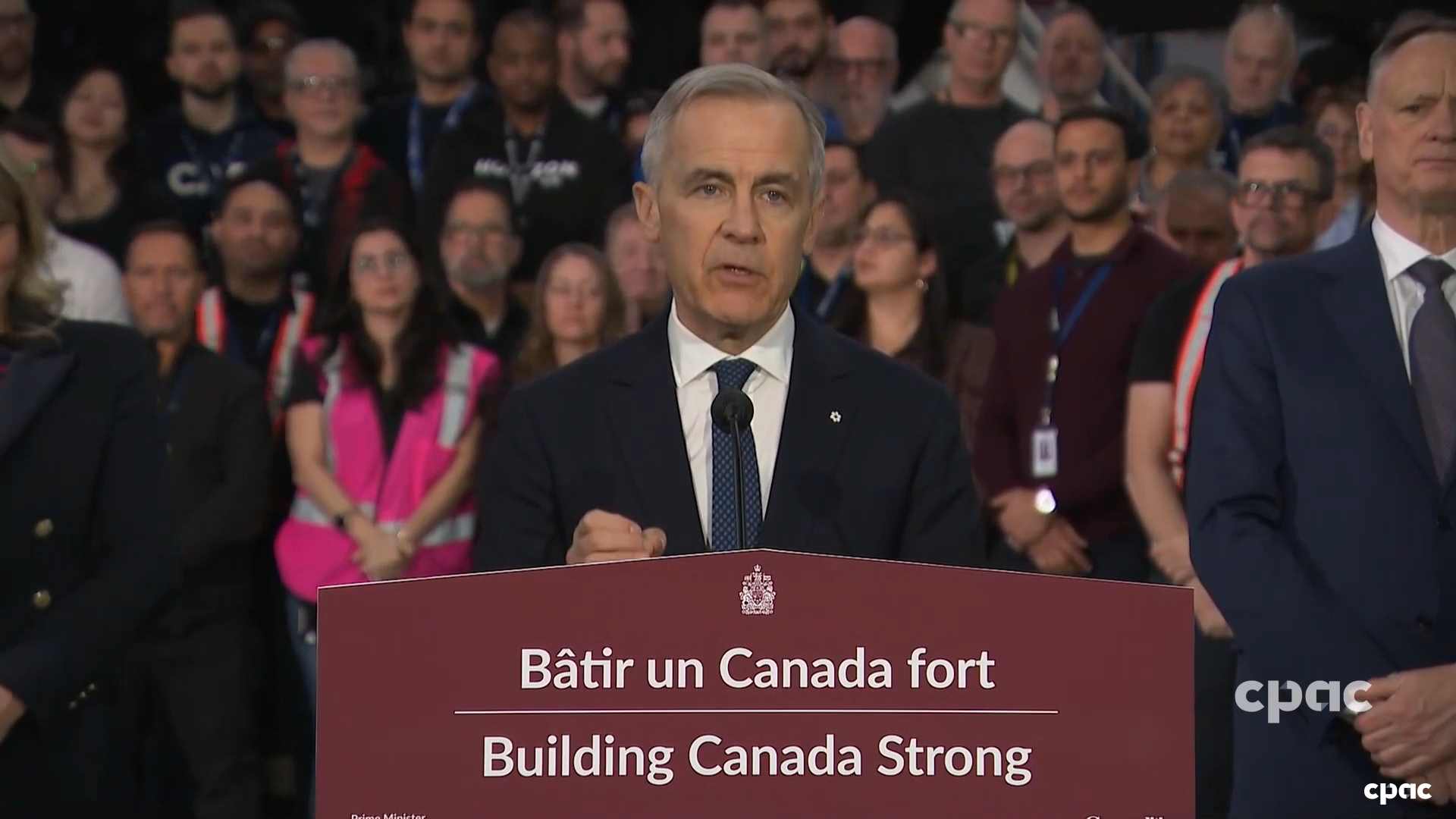
When Prime Minister Mark Carney launched Canada’s first Defence Industrial Strategy (DIS) in February, the government framed it as a plan to strengthen “security, sovereignty and prosperity” while reinforcing Canada’s strategic autonomy. The strategy argues that procurement has been too slow and too dependent on foreign suppliers, leaving both the Canadian Armed Forces and domestic industry underprepared for a changing security environment.
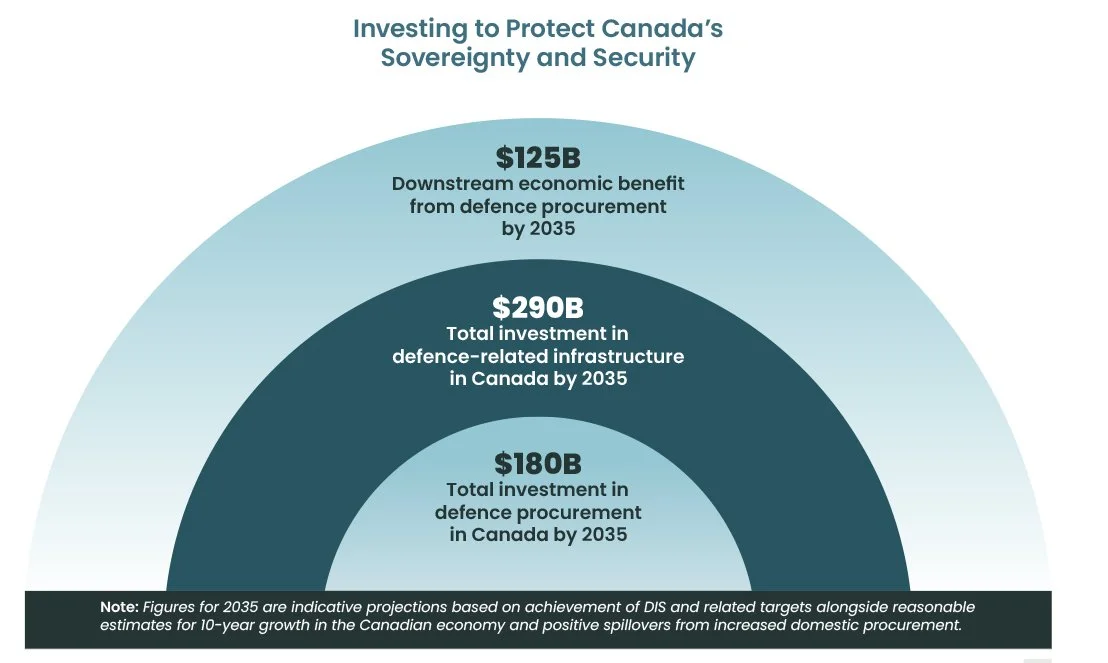
Ottawa says the strategy positions Canadian industry to take advantage of roughly $180 billion in defence procurement opportunities and $290 billion in defence-related capital investment opportunities in Canada over the next decade — a combined $470 billion in projected activity. The government says the plan could create 125,000 jobs, increase defence exports by 50 percent, raise the share of defence contracts awarded to Canadian firms to 70 percent, and expand defence industry revenues by more than 240 percent.
The strategy also arrives alongside a broader expansion of defence spending tied to Canada’s commitment to reach NATO’s two percent spending target and increase military investment in the coming decade.
A central administrative change is the creation of a new Defence Investment Agency, which the government says will streamline procurement and accelerate major acquisitions while strengthening partnerships with Canadian industry. The strategy is built around a “Build-Partner-Buy” framework designed to prioritize domestic manufacturing where possible while still allowing international partnerships and purchases.
Legal analysis of the plan suggests Ottawa also intends to revise existing procurement rules to emphasize Canadian-controlled intellectual property, strengthen domestic supply chains and expand opportunities for Canadian-owned companies to move beyond subcontracting roles.
In short, the Defence Industrial Strategy positions defence not only as a security policy, but also as a major industrial policy initiative.
Public Capital and the Role of BDC
One of the most important — and least publicly discussed — mechanisms supporting the strategy is the role of the Business Development Bank of Canada (BDC).
The strategy includes a $4-billion Defence Platform at the Business Development Bank of Canada, created to provide financing to defence and dual-use companies. The move marks the first time in decades that Canada’s state-owned development bank has been explicitly tasked with supporting defence industry growth.
BDC’s mandate is to deploy public capital to sectors where private financing may be limited. By providing financing to companies developing defence or dual-use technologies, the bank can help those firms expand production, attract private investment and scale into larger suppliers.
Regional development agencies are also deploying new funding streams, including the Regional Defence Investment Initiative, which is designed to help companies expand production capacity, strengthen supply chains and develop new defence-related technologies.
Taken together, these programs place public capital at the centre of Canada’s emerging defence industrial expansion.
The Proposed Defence, Security and Resilience Bank
Alongside the Defence Industrial Strategy, another project has begun to attract attention: the proposed Defence, Security and Resilience Bank (DSRB).
The idea is to create a multilateral financial institution dedicated to financing defence investments among NATO members and allied countries. The proposed bank would operate similarly to other international development banks by raising money through global capital markets and lending those funds to governments for defence procurement.
Supporters argue that such an institution could lower borrowing costs for governments under pressure to increase military spending and help stabilize defence supply chains by improving access to credit for manufacturers.
The concept has circulated among policy groups, finance experts and former NATO officials over the past several years, and discussions about creating the bank have begun among a group of allied countries.
However, the proposal remains politically uncertain. Some governments have expressed skepticism about creating a new international defence lender, and there is currently no formal NATO process underway to establish the institution.
Canada’s Financial Sector Steps In
Despite the uncertainty, Canada has emerged as a prominent supporter of the initiative.
Several Canadian cities — including Vancouver — have expressed interest in hosting the bank’s headquarters. Provincial leaders have promoted the idea as an opportunity to attract jobs and financial activity linked to global defence investment.
Canada’s financial sector has also aligned behind the concept. All six of the country’s major banks have publicly indicated support for the proposed defence bank.
Their support does not mean they are investing capital directly in the institution. Rather, banks have indicated they would be prepared to assist with the financial infrastructure required for such an institution, including advising on capital structure, investor engagement and access to global debt markets.
In other words, they would help the bank raise money from investors if it is created.
Another notable detail is that Isabelle Hudon, the CEO of BDC, is representing Canada in negotiations related to the bank’s potential creation.
Security Policy or Economic Architecture?
None of this necessarily signals wrongdoing. Governments routinely use industrial policy to strengthen sectors considered strategically important, from aerospace to telecommunications.
Canada’s defence strategy is explicitly framed as a response to geopolitical instability and supply-chain vulnerabilities. Officials argue the country must develop stronger domestic production capacity to ensure long-term security and independence.
But the scale and structure of the new policies are significant.
The Defence Industrial Strategy combines procurement reform, public development-bank financing, regional innovation funding, and potential participation in a new multilateral defence lending institution.
That integration raises broader questions about how defence spending will function in the future.
When industrial policy, public finance and capital markets become closely linked to military production, defence spending can evolve from episodic government expenditure into a permanent economic sector.
Whether that transformation ultimately strengthens Canadian sovereignty or primarily enriches financial and industrial actors surrounding defence spending is yet to be determined.
