

Eby backs off confidence vote on DRIPA changes as opposition grows, election risk eases
British Columbia Premier David Eby has backed away from making proposed changes to Indigenous rights legislation a confidence matter, after doubts emerged about whether his government had enough support to pass the bill.
The NDP had planned to suspend parts of the Declaration on the Rights of Indigenous Peoples Act, or DRIPA, and initially made the measure a confidence vote. That raised the prospect of an early election if the legislation failed. Eby has since dropped that approach, reducing the immediate risk of an election.
The change followed division within the NDP caucus. Eby said Indigenous MLA Joan Phillip told him she could not support the suspension. For a government with a one-seat majority, that put the numbers in question. Eby said her position changed the math and that the government did not want to send British Columbians into an election.
The government still plans to proceed with legislation to pause parts of DRIPA. Eby has argued the law has created legal peril for the province after recent court developments, including a ruling related to mining.
The explanation has not reduced opposition from Indigenous leaders or political opponents. Indigenous leaders have condemned the plan, criticized the consultation process and accused the government of moving ahead despite objections. The dispute has also strained the government’s relationship with major First Nations organizations. Eby has said his government will now deal directly with rights and titleholders and try to secure support from individual chiefs.
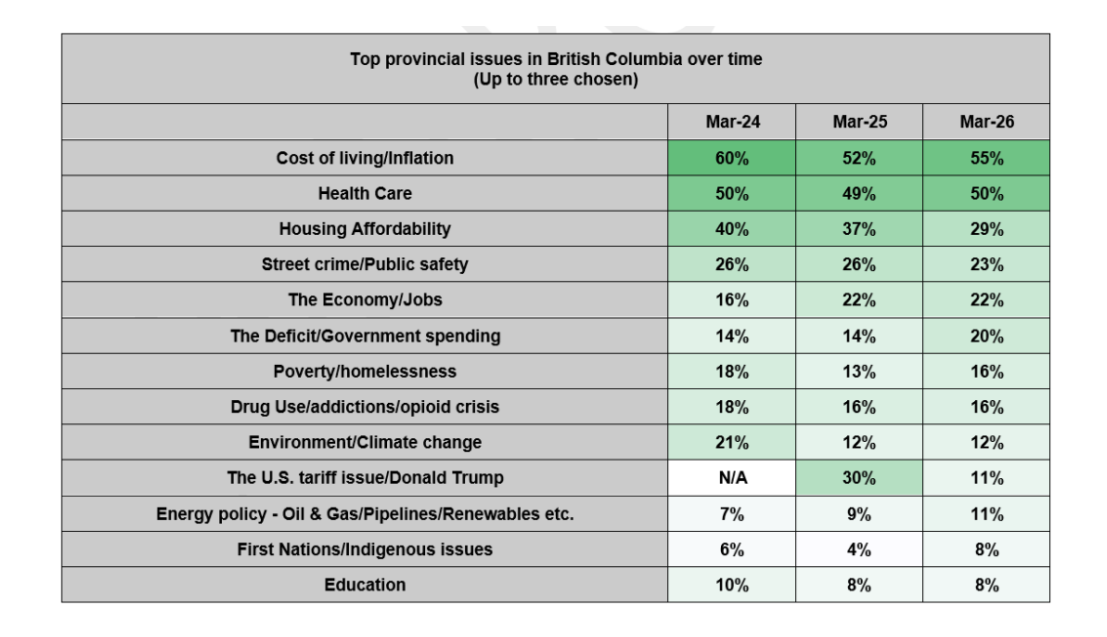
Source: Angus Reid.
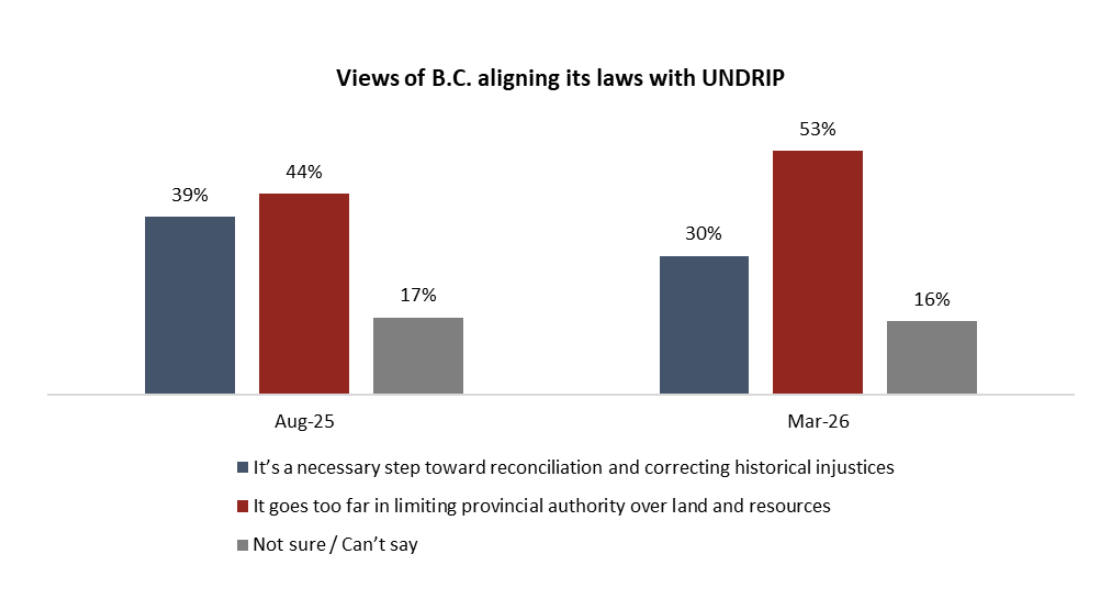
The majority who believe B.C. has transferred too much power away from the provincial government to First Nations on key areas such as property and mineral rights are also far more likely to say they would support the opposition BC Conservatives (70%) than Eby’s BC NDP (21%). Perhaps this political pressure is one of the reasons Eby’s government is considering weakening DRIPA’s language. Source: Angus Reid.
Political opponents have seized on the issue. Conservatives have portrayed Eby’s retreat on the confidence vote as evidence he does not have full support within his own caucus. They have also said they would repeal DRIPA.
The episode has raised broader questions about the government’s political judgment. By tying the legislation to confidence, the premier created the possibility of an election over a divisive issue at a time when the NDP does not appear ready for a campaign. The party has not recruited new candidates, put a campaign team in place or begun building a platform.
The government is also facing political pressure over the deficit, healthcare problems and affordability.
At the same time, the government is advancing another major reconciliation file. It introduced legislation this week to ratify a treaty with the K’omoks First Nation, the result of roughly 30 years of negotiations.
The government has presented the treaty as evidence that reconciliation work is continuing. But the timing has drawn criticism because of the dispute over DRIPA. The treaty itself also faces objections from neighbouring First Nations over territorial boundaries. It would still need federal ratification if it passes the BC legislature.
Eby has said the government is prepared to extend the legislative session to allow debate on the DRIPA changes. He has also said the NDP is willing to test the confidence of the house on another matter.
For now, the immediate threat of an election has receded. But the government still faces pressure from within its caucus, from Indigenous leaders and from the opposition, and its next steps remain contested.
