

Multiple credit downgrades deepen concerns over BC finances as deficits and debt rise

(Image courtesy CBC)
British Columbia’s finances took another hit this month as S&P Global Ratings downgraded the province’s credit rating, marking its fifth cut since 2021 and adding to mounting concerns about large deficits, rising debt, and the lack of a clear path back to balance.
The downgrade follows a similar move by Moody’s Ratings in March, further underscoring the pressure facing the province after its February 2026 budget projected another string of large deficits.
S&P lowered BC’s rating to A from A-plus after the budget forecast a deficit of $13.3 billion in 2026-27.
The agency said budgetary imbalances are expected to remain among the highest of all rated non-US local and regional governments beyond the outlook horizon, while the province’s debt burden is rising at a fast pace.
S&P said BC’s debt burden could reach 255 percent of operating revenue by fiscal 2029, placing it among the highest among Canadian provinces.
The downgrade is another step down for a province that held a AAA rating with S&P for 14 years before the string of cuts that began in 2021.
It also comes just weeks after Moody’s downgraded BC’s long-term issuer and senior unsecured debt ratings to Aa2 from Aa1 and maintained a negative outlook, citing what it called a marked deterioration in the government’s finances, including large structural deficits and rising debt.
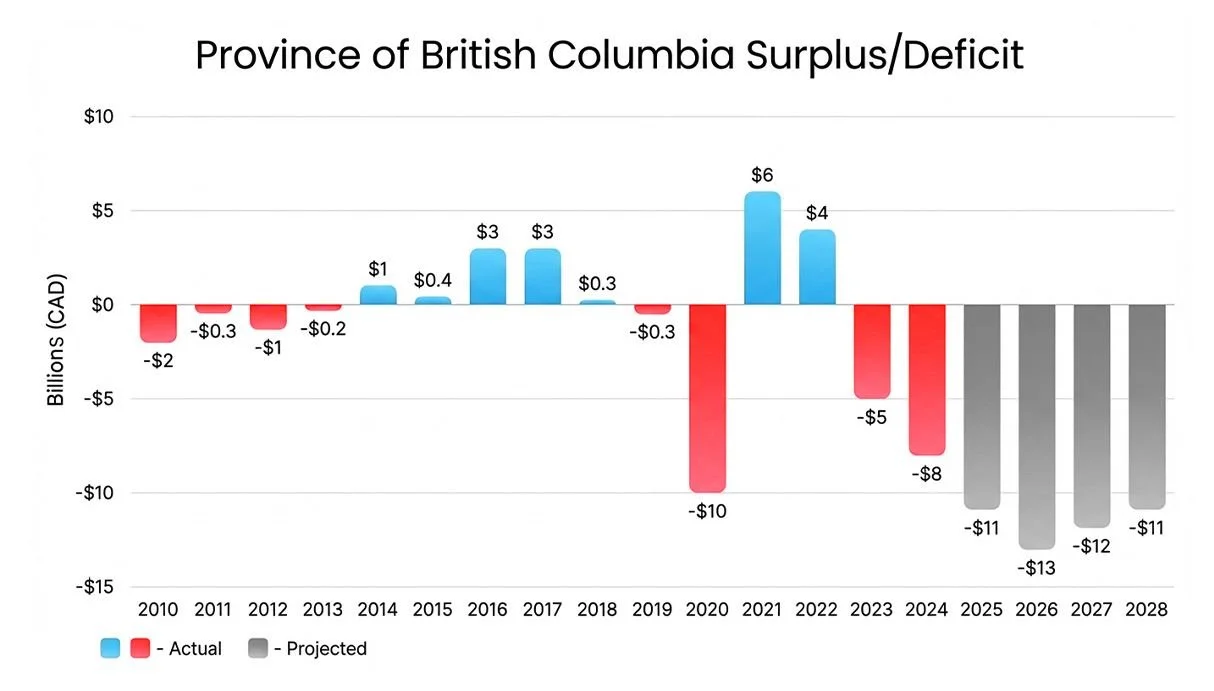
Moody’s projected consolidated deficits of $13.3 billion in 2026-27, $12.2 billion in 2027-28 and $11.4 billion in 2028-29, while forecasting BC’s net direct and indirect debt will rise to $178.5 billion in 2026-27 and $230 billion by 2028-29.
Taken together, the downgrades point to a province facing sustained deficits, accelerating debt and higher borrowing costs, with no clear timeline for a return to balance.
While BC has taken some corrective fiscal measures by cutting costs and raising revenues, S&P said sizable deficits will persist because the government lacks a clear plan to balance the budget.
Moody’s pointed to continued growth in operating and capital spending, particularly in healthcare, social programs and housing affordability initiatives, as contributing to large structural deficits.
The agency also said uncertainty tied to global and US trade conditions adds further risk to the fiscal outlook.
