

Ottawa blocks release of Kamloops residential school grave search reports
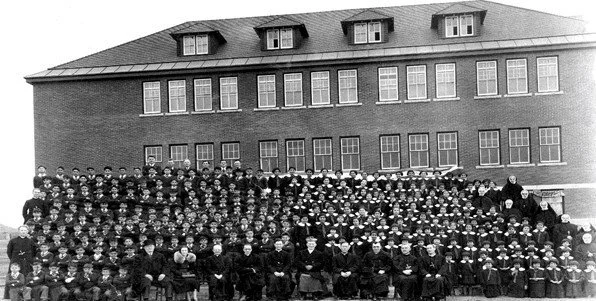
The federal government has refused to release progress reports related to the search for alleged unmarked graves at the former Kamloops Indian Residential School, citing confidentiality provisions under access-to-information law.
According to Blacklock’s Reporter, the Department of Crown–Indigenous Relations denied a request for documents detailing work carried out by the Tk’emlúps te Secwépemc First Nation under a federally funded project announced after a 2021 claim that the remains of 215 children had been detected at the site.
The project received $12.1 million in federal funding for what Ottawa publicly described at the time as the “exhumation of remains” and forensic DNA analysis. More than four years later, no human remains have been recovered.
As part of the funding agreement, the First Nation was required to submit regular activity progress reports to the federal government. Blacklock’s Reporter sought access to those reports to determine what investigative work had been completed and how the funds were spent.
The department rejected the request, citing section 20(1)(b) of the Access to Information Act, which allows the government to withhold financial, scientific, or technical information treated as confidential by a third party.
Federal officials did not explain why the reports were considered confidential.
Internal federal correspondence obtained separately by Blacklock’s Reporter suggests that skepticism about the claims existed within government agencies from an early stage.
In internal emails, Parks Canada staff questioned whether ground-penetrating radar data supported repeated public references to “graves” or “burials.”
One Parks Canada consultant wrote that the 215 radar “hits” identified in 2021 had not been investigated in a way that could confirm they were graves, noting that ground-penetrating radar frequently produces false positives.
The consultant recommended using more cautious language such as “possible” or “probable” graves until further investigation could be conducted.
By 2024, internal discussions reflected even greater caution. Senior staff warned that radar technology does not establish the presence of unmarked graves at all, but only identifies subsurface anomalies.
“Ground-penetrating radar does not provide evidence of potential unmarked graves,” one internal email stated. “It provides evidence of anomalies. I am quoting the archaeologists here.”
In another exchange, a manager suggested avoiding technical terminology altogether, proposing revisions to minimize references to anomalies in public-facing materials.
Despite the unresolved questions and lack of physical evidence, Parks Canada proceeded with the designation of the Kamloops residential school as a national historic site. Staff were advised internally to “stay extra quiet” during the process, according to the correspondence reviewed by Blacklock’s Reporter.
The federal government has not said whether it intends to release any portion of the progress reports or provide a public accounting of the work completed under the funding agreement.
