



In recent weeks, demonstrations calling for the toppling of Iran’s government have taken place across Canadian cities. Organizers and participants describe them as acts of solidarity with Iranians facing repression, corruption, and economic hardship. Those grievances are real. But the way these protests are being framed inside Canada raises questions about whose agenda is being advanced, and what role Canada has already played in shaping Iran’s hardships.
At several demonstrations, foreign flags have been displayed: the United States flag, the Israeli flag, and Iran’s pre-1979 Lion and Sun flag, a monarchist symbol banned inside Iran because it represents the dynasty overthrown in the 1979 revolution. Calls for US military intervention have accompanied some of these rallies, including protests targeting Iran’s closed embassy in Ottawa, shuttered since Canada severed diplomatic relations in 2012.
Most would agree that Iranians have a right to protest and demand change without fear of repression in their own country. But the story Canadians are being told is more complicated, particularly the assumption that Canada and its allies are acting primarily as principled supporters of “democratic values.”
To understand the present moment, it is necessary to examine the past. This report examines Canada’s record in Iran and its alignment with US foreign policy objectives, including sanctions, military integration, and publicly funded initiatives aimed at influencing political outcomes.
Selective ‘benevolence’
Across decades and political stripes, Canadian leaders have consistently framed foreign policy in the language of universal ideals: Stephen Harper vowed Canada would not waver in its “defence of freedom, democracy, human rights and the rule of law,” at home and abroad, and Justin Trudeau promised Canada would help build “a more peaceful and prosperous world.” Prime Minister Mark Carney has echoed similar sentiments.
Canada’s foreign policy is frequently presented as emphasizing diplomacy and concern for human rights above all. Its record in Iran, however, tells a different story. That record reveals a long-running pattern of selective outrage.
While Iran is constantly singled out for repression and treated as a moral outlier, Canada has maintained deep ties with governments whose human-rights abuses are well documented. Saudi Arabia, among the world’s most repressive states, has for years ranked as one of the largest recipients of Canadian arms exports. These transfers have continued despite widely reported abuses, including mass executions, unfair trials, and the suppression of peaceful dissent, as well as Saudi Arabia’s role in the war in Yemen.
This pattern did not begin in the present. In Iran, it stretches back decades.
In the early 1950s, Iran’s prime minister, Mohammad Mossadegh, moved to nationalize the country’s oil industry, challenging British control over Iranian resources. At the time, Canada’s Department of External Affairs publicly criticized Iran’s actions, echoing British concerns. In parliamentary statements, Canada’s external affairs minister warned that Iran’s push for sovereignty risked instability and exposure to communist influence.
When Britain organized an embargo on Iranian oil to weaken Mossadegh’s government, Canada followed suit. Thirteen months before the August 1953 coup that removed him from power, Canadian diplomatic cables described Mossadegh’s continued popularity as a growing problem. On August 19, 1953, Iran’s prime minister was overthrown in a coup orchestrated by US and British intelligence services — the CIA’s Operation Ajax and MI6’s Operation Boot — after which Mohammad Reza Pahlavi, the Shah of Iran, consolidated power and went on to rule the country for the next 26 years.
Within two years, Canada established diplomatic relations with Iran under Mohammad Reza Shah Pahlavi and proceeded to do business with his regime for more than two decades.

(Mohammad-Reza Shah Pahlavi.)
Commerce, arms, and complicity
During the Shah’s rule, as Canada expanded its diplomatic and economic engagement with Iran, Canadian officials visited the country regularly. At the same time, Iran’s human-rights reputation was among the worst in the world. The Shah’s security services were notorious for torture, arbitrary detention, and the violent suppression of dissent. Amnesty International said in 1975 that “no country in the world has a worse record in human rights than Iran.”
Yet, as with Saudi Arabia today, Ottawa raised little objection. During the 1970s, Canada shipped military goods to Iran valued at more than $150 million in current dollars, based on conservative estimates drawn from Stockholm International Peace Research Institute data.
When the Shah was overthrown in 1979, Canada shuttered its embassy in Tehran, which remained closed for nearly a decade, and diplomatic engagement stayed limited and fragile for decades afterward. That period reflects a pattern still visible today: Canadian policy has prioritized strategic alignment with US and UK objectives and commercial opportunity, while human-rights concerns have remained a low priority and selectively applied.
And in recent years, Canada’s posture toward Iran has hardened further. What little diplomatic relations that remained were severed in 2012, the same year Canada designated Iran a “state sponsor of terrorism” under the State Immunity Act. Combined with the Justice for Victims of Terrorism Act, this designation allowed plaintiffs to pursue civil claims against Iran for losses or damages linked to acts of terrorism attributed to the state, regardless of where those acts occurred globally.
Canada also identified the Quds Force, a branch of the Revolutionary Guard, as a terrorist group in 2012. It also closed its embassy again.
Canadian political rhetoric had shifted from limited diplomacy with hostile overtones to open regime opposition. Senior officials publicly declared solidarity with efforts to “stand against” Iran’s government, while sanctions were framed as moral instruments despite evidence that they inflict widespread harm on civilian populations.
Taxpayer-funded influence
Canada has also actively funded initiatives designed to shape political outcomes in Iran.
After severing diplomatic ties in 2012, the federal government directed public funds to programs hosted at major Canadian institutions focused on Iran’s political future. These initiatives sought to engage Iranians inside and outside the country, facilitate coordination among dissident groups, and develop digital tools designed to bypass state censorship in countries designated as adversaries, including Iran.
Among them were projects at the University of Toronto’s Munk School of Global Affairs. One such initiative, the Global Dialogue on the Future of Iran, began with $250,000 in government support and was later expanded through a $9 million federal investment focused on online information operations.
The Global Dialogue on the Future of Iran reflected a shift in how Ottawa approached the country after suspending diplomatic relations. Rather than re-establish formal channels, the federal government funded an initiative designed to engage Iranians directly through digital platforms and diaspora networks, effectively bypassing the Iranian state. While officials framed the project as “public diplomacy,” its structure and timing signalled efforts to shape political narratives in ways closely aligned with US foreign policy objectives and those of its regional partners.
The Global Dialogue began with a conference on Iran launched by then-foreign affairs minister John Baird, using social media to enable participation from inside Iran while protecting users’ identities. The initiative was praised for its effort to engage Iranians and the Iranian diaspora directly, and Munk School director Janice Stein said 365,000 people logged in from within Iran.
It is also worth noting that Baird later joined the board of directors of an organization that lobbies Canadian policymakers on behalf of a foreign government with a long-standing adversarial relationship with Iran, and a stated interest in regime change.
Canada also ponied up more than $11 million for the International Atomic Energy Agency for its “Iran verification work.” This was an agreement between Iran, the US, Canada, and other nations that aimed to limit Iran’s nuclear program in exchange for sanctions relief. In 2018, Trump withdrew the US from the deal, arguing it was too lenient, and reimposed strict sanctions.
Then-foreign affairs minister Chrystia Freeland said at the time: “Canada is engaging with Iran in order to protect key Canadian interests, including Canadian consular interests, promote our values, and advance human rights. We continue to oppose Iran’s support for terrorist organizations, its threats toward Israel, its support for the Assad regime in Syria, and its ballistic missile program. We will continue to work closely with our allies and partners to hold Iran to account.”
‘We will not open diplomatic relationships with Iran unless there is a regime change’
Years later, in June 2025, nuclear negotiations between the US and Iran had resumed, raising hopes for a diplomatic breakthrough. However, those efforts were abruptly derailed when Israel and the US launched surprise attacks on Iranian nuclear facilities, effectively undercutting the renewed push for a negotiated resolution. Months later, in February 2026, Iran and the United States have resumed indirect nuclear talks in Oman.
Foreign Affairs Minister Anita Anand told reporters on February 14 that Canada wants to see regime change in Iran. “We will not open diplomatic relationships with Iran unless there is a regime change. Period,” she said. The same day, Anand announced further sanctions against individuals linked to the Iranian state.
Whatever one thinks of Iran’s autocratic government, the overarching theme here is that Canada’s policy choices have been clear for years: close alignment with Washington’s objectives, advanced through taxpayer-funded initiatives framed as humanitarian engagement.
All of this context matters when protests in Canada begin echoing interventionist language, as these narratives don’t emerge in a vacuum. They are massaged, framed, and deployed in ways that serve external interests as much as they reflect genuine Iranian grievances. Many Canadians mistake these agendas for humanitarian concern, and assume that the actors promoting “alternatives” to the Iranian regime are acting on behalf of ordinary Iranians.

(A protester in downtown Vancouver. Image: Coastal Front.)
2026: unrest, sanctions, and information warfare
As mentioned, the current wave of unrest in Iran began amid a deep economic crisis. Last year, Iran’s currency lost significant value, with sanctions targeting the country’s oil industry and financial system widely identified as a contributing factor. Merchants in Tehran’s Grand Bazaar were among the first to protest, calling not for regime change, but for relief from inflation and economic mismanagement.
As the unrest escalated, armed groups appeared in the streets, buildings and mosques were set ablaze, and widespread violence followed. At the same time, the information environment surrounding the protests — including who was responsible for the violence and how extensive it actually was — became highly contested. Western media coverage relied heavily on casualty figures produced by organizations based outside Iran that receive funding from the US government through the National Endowment for Democracy (NED), an entity created to carry out openly what US intelligence agencies had previously done covertly.
Among the most frequently cited are Human Rights Activists in Iran and its media arm, the Human Rights Activists News Agency, along with the Abdorrahman Boroumand Center for Human Rights in Iran and the Center for Human Rights in Iran. These NED funded groups have repeatedly appeared across major Western reporting as authoritative trackers of deaths, arrests, and abuses, shaping the public narrative.
The NED was established in 1983 during the Reagan administration, amid heightened scrutiny and controversy over US intelligence operations following major disclosures in the 1970s. A key event was the Church Committee, a US Senate investigation launched in 1975, which documented serious abuses by the CIA and other agencies, including involvement in assassination plots, domestic spying and political surveillance, and unethical human experimentation.
Although the NED is formally a private nonprofit, it is funded overwhelmingly through US government appropriations and functions as a state-backed vehicle for political intervention abroad. It is widely understood as a way to shift sensitive influence operations out of the CIA’s covert sphere and into a more publicly palatable “democracy promotion” framework. The NED’s own leadership has acknowledged this: in 1986, then-president Carl Gershman warned it would be “terrible” for democratic groups abroad to be seen as subsidized by the CIA. “We saw that in the 60s, and that's why it has been discontinued. We have not had the capability of doing this, and that's why the endowment was created,” Gershman told the New York Times. Co-founder Allen Weinstein later told the Washington Post that “a lot of what we do today was done covertly 25 years ago by the CIA.”
Former CIA officer John Stockwell described in an interview how such operations can hinge on media saturation and atrocity narratives, including outright falsehoods and fabricated imagery, to manufacture public consent. Recalling campaigns to demonize US adversaries, he said: “We pumped dozens of stories about Cuban atrocities… We ran [faked] photographs that made almost every newspaper in the country… It was pure, raw, false propaganda.”
The aforementioned groups are the source of many of the most extreme atrocity claims and highest casualty figures reported in the media on Iran in recent weeks, and their reporting has formed the basis for coverage by NPR, ABC News, Sky News, CNN, The Wall Street Journal, and the New York Post, to name just a few.
The NED has also publicly credited itself with supporting previous protest movements in Iran, including the “Woman, Life, Freedom” demonstrations that spread across the country in 2023.
‘This idea that Iran is a threat is a complete fabrication’
To better understand how foreign intervention and narrative framing intersect, Coastal Front spoke with Samir Saul, a professor of international history at the Université de Montréal who has published extensively on the Arab world, international relations, and imperialism, including a book on the latter.
Asked what Canadian media coverage of Iran consistently overlooks, Saul said what is missing is how Iranians feel about their own society and government, and how they respond to foreign intervention.
“One of the big problems in Iran is whether foreign powers actually have the right to intervene in the internal affairs of Iran, and to determine who should govern Iran,” he said.
He described that assumption — that major Western powers are entitled to shape political outcomes abroad — as the central issue.

(Professor of history at the Université de Montréal, Samir Saul. Image: Université de Montréal.)
In Western political discourse, Iran is often framed as a threat. Saul rejects that premise outright.
“The Iranian state wants to trade, to have relations with the West — not to threaten the West. It is the West that wants to threaten Iran, to overthrow its regime, and put in its place a puppet regime so that the West can control Iran.”
He argues that the language of security is frequently deployed to legitimize pressure campaigns with the underlying objective of regime change.
“This idea that Iran is a threat is a complete fabrication,” he said.
When asked how Canada should respond as the United States escalates pressure in the region, Saul framed the issue as one of both principle and national interest.
“Canada should oppose intervention by big powers in the internal affairs of other countries,” he said. “It has an interest in doing so because we could be next in line. Canada is now a potential target of US interventionism. So it’s not just a theoretical issue, or something involving principles. It is in Canada’s national interest to oppose this idea that foreign powers should be allowed to decide what happens in other countries.”
At present, however, he sees little independence in Canadian foreign policy on major geopolitical decisions. In practice, Canada remains closely aligned with the United States on issues of war and peace.
For Saul, that alignment carries consequences. The broader historical record of Western intervention, he argues, speaks for itself.
“All these interventions are complete disasters. Not one of them has achieved anything that the West pretended it would achieve.”
He points to Iraq, Afghanistan, Libya, and Syria as examples where stated humanitarian objectives gave way to prolonged instability and fragmentation.
If a similar approach were taken toward Iran, he warns, the scale would be “far greater.”
“You will have millions of refugees flowing out of Iran to neighbouring countries, destabilizing them, and destabilizing Europe, because they will certainly reach Europe.”
Saul added that if Iranians want to overthrow their own government, that is their decision.
“That’s fine,” he said. “That’s their choice to make. But foreign intervention is a completely different affair. Totally different.”
Central to all of this, Saul argues, is information control.
“The propaganda machine kicks into action to create ‘facts,’ to create an alternative world that justifies intervention. A narrative is an interpretation created to justify action,” he said.
“They need to lie to keep Western public opinion on their side. Western public opinion is not completely foolish. It asks questions: why are we involved in Syria, in Iran, in Afghanistan, and so on? The answer has to be that we are there for a good cause. We are there because there are awful, monstrous people running these countries, and we have to do something about it.”
Atrocity propaganda and the politics of outrage
Claims of atrocities emerging from regions of strategic geopolitical importance should prompt reflection on governments’ long history of feeding atrocity propaganda to the public. One of the most famous examples is the Nayirah Testimony: false testimony delivered in 1990 before the US Congressional Human Rights Caucus by a 15-year-old girl identified as “Nayirah.”
Nayirah claimed to have seen Iraqi soldiers take babies out of incubators in a Kuwaiti hospital, leaving them to die on hospital floors, a claim repeated by US Senators and former President George H.W. Bush, who highlighted the story in speeches supporting American involvement in the Gulf War.
Bush repeated the story at least 10 times in the following weeks.
However, it was revealed in 1992 that Nayirah was the daughter of the late Saud Al-Sabah, the former Kuwaiti ambassador to the US.
The congressional group’s chairmen, Tom Lantos, a California Democrat, and John Edward Porter, an Illinois Republican, had a close relationship with Hill & Knowlton, a public relations firm hired by Citizens for a Free Kuwait, which lobbied Congress for military intervention.
Nayirah did not witness any of the alleged atrocities, and subsequent investigations found that there was no evidence that babies had been removed from incubators.

(15-year-old “Nayirah” giving her testimony to the United States Congressional Human Rights Caucus on October 10, 1990.)
The relevance of this history is not that atrocities never occur, or that every claim should be dismissed. It is that in moments of geopolitical conflict, emotionally charged allegations can be treated as certainty before they are verified, narrowing public debate.
At that point, the story becomes self-propelling. A claim is published, a headline is written, the headline goes viral, political leaders repeat it, and within hours the allegation is no longer treated as an allegation. It becomes the moral premise for policy, and those who question it are cast as heretics. These narratives are built through an ecosystem of “credible” intermediaries — NGOs, media arms, and advocacy networks — whose claims are hardened into fact through repetition. Unlike overt censorship regimes, where people often recognize they are being fed lies and half-truths, this model works differently: it spreads through trusted institutions, and the public absorbs it and becomes a vessel for such propaganda without realizing it.
In the case of Iran, Canadians should treat the most extreme claims with discipline and skepticism. Calls for intervention framed in humanitarian language are seldom altruistic, and such interventions have repeatedly produced deeper instability, civilian suffering, and long-term disaster, outcomes that many Iranians, regardless of their views of their government, do not want imposed on their country. One can view the Islamic Republic of Iran with contempt while still recognizing a basic reality: outside powers do not intervene because they care about Iranians. They intervene to install a government that will align with their objectives.

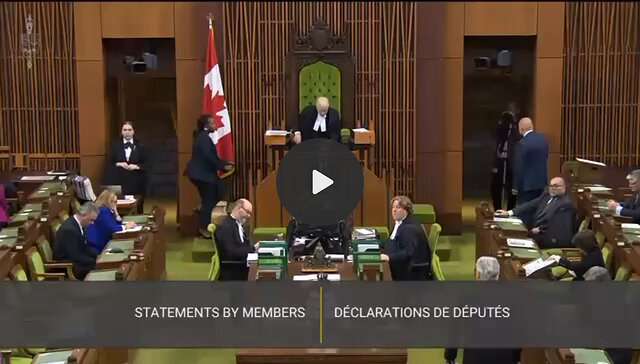


The impact of social media
Numerous cases circulating on social media also illustrate how false or misleading claims spread widely. Individuals were reported killed during protests who were later shown to be alive or had no connection to Iran at all. In several instances, photos were misidentified, names fabricated, or deaths falsely attributed to security forces despite no evidence that such killings occurred.
Among the cases circulated were reports by Iranian opposition media claiming that a teenage boy identified as “Kourosh Shirini” had been killed by Iranian security forces in Tehran; the image was later shown to belong to David Bennet, the son of a former Israeli prime minister.
Mobina Beheshti, a 21-year-old from Gorgan, and Reza Niknam from Fars Province both appeared in videos denying reports of their own deaths after seeing their names circulated online. Israel’s Channel 12 named a young Israeli woman, Noya Zion, as an Iranian protest victim, prompting her to post publicly that she was alive and had no connection to Iran. Iran International also named Mohammad Rasoul Bayati, a bodybuilder, as a protest fatality; he later confirmed he was unharmed after being contacted by concerned friends and family.
Even the protest movement’s most widely shared imagery proved misleading. A video that became a symbol of Iranian resistance showed a woman relighting her cigarette with a burning image of Iran’s Supreme Leader, Ayatollah Ali Khamenei, and was amplified by Canadian MPs, journalists, and public figures as an act of bravery from within Iran. The footage, however, was filmed outside a Canadian Imperial Bank of Commerce branch in Ontario, Canada.


‘Go out together into the streets. The time has come’
Interestingly, during the protests, Israel’s intelligence service, Mossad, used its official Farsi-language social media account to openly encourage escalation and signal direct involvement on the ground.
“Go out together into the streets. The time has come,” Mossad instructed Iranians. “We are with you. Not only from a distance and verbally. We are with you in the field.”
Former US secretary of state and CIA director Mike Pompeo said, “Happy New Year to every Iranian in the streets. Also to every Mossad agent walking beside them.”

Reza Pahlavi, the eldest son of Mohammad Reza Pahlavi, the last shah of Iran, a self-proclaimed “Crown Prince” and darling of Western liberals and conservatives alike, took to social media to label government institutions as “legitimate targets,” effectively placing those who operate within them in the crosshairs.
“Employees of government agencies, as well as the armed and security forces, have the opportunity to join the people and become allies of the nation, or choose to side with the murderers of the people and earn the eternal shame and curse of the nation,” he wrote.
As mentioned, while initial demonstrations were driven by inflation and currency collapse, they were soon overtaken by widespread violence across multiple cities. Public infrastructure was set ablaze, municipal workers were attacked, and religious sites were targeted, according to widely circulated video footage and local reporting. In Kermanshah, armed groups reportedly fired on police, and a three-year-old child, Melina Asadi, was shot and killed during the unrest — yet Western leaders amplified the protests as a moral spectacle.

(In Iran’s Kermanshah province, large crowds turned out for the funeral of Melina Asadi, a three-year-old girl who was reportedly shot and killed while on her way to a pharmacy with her father, according to local reports.)

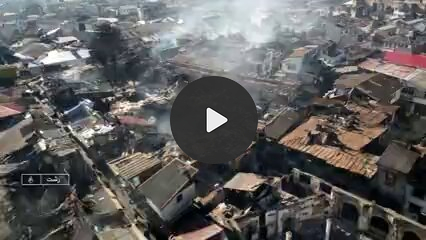
Similar scenes were reported elsewhere. Fire stations and municipal buildings were torched, buses were burned, transit systems vandalized, and unarmed security personnel were beaten to death in several provinces. Local authorities documented extensive damage, including millions of dollars in destruction in Mashhad alone. Much of this violence was captured on video, including footage filmed by the perpetrators themselves.
Yet this dimension of the unrest received little attention in Western discourse. Coverage focused overwhelmingly on state repression, while violence carried out by non-Iranian state actors was largely absent from dominant narratives, resulting in an asymmetrical portrayal of events.
Competing death tolls emerged, with Iranian authorities reporting significant losses among police and security personnel, while Western outlets largely cited numbers from a small group of Washington-based organizations funded by the US government.
A countervailing account in the Financial Times, however, spotlights claims that the protests were infiltrated by violent actors, noting a “muddied account” of events in which “agitators mingled with genuine protesters.”
“There were groups of men in black clothes, agile and quick,” said a Tehran-based demonstrator interviewed by the Financial Times. “They would set one dustbin on fire and then quickly move to the next target.”
Another witness told the Financial Times he saw about a dozen fit men, “looking like commandos,” dressed in similar black clothing, running through the area and calling on people to leave their homes and join the protests.
“They were definitely organized, but I don’t know who was behind them,” he said.
Many Iranians believe the recent riots were incited or amplified by foreign actors, a suspicion not only shaped by the previously mentioned Mossad and Pompeo posts, but by historical precedent. A CIA memorandum from March 1953, written five months before the overthrow of Mosaddegh, reviewed the Agency’s clandestine capabilities in Iran. It detailed “mass propaganda” efforts through the press and political and clerical contacts; the use of poison pens, personal denunciations, and rumor-spreading; and the orchestration of street riots, demonstrations, and mobs. You can read the memo here.
As the January violence subsided, large crowds reportedly gathered in cities across Iran — from Tehran to Mashhad — to denounce the riots, reject foreign interference, and express support for the government. These demonstrations, involving tens of thousands of people according to reports, received little coverage in Western newsrooms, reinforcing a narrative that privileged one set of Iranian voices. The demonstrations reportedly continued through February, with some Western leaders dismissing footage of the protests as AI-generated fabrications.

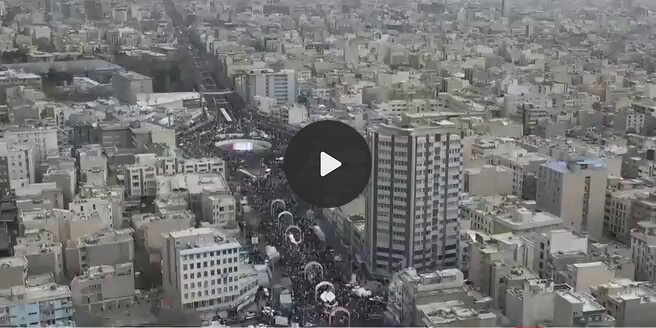
Amid all of this, US and Canadian political leaders escalated rhetoric. President Trump publicly encouraged rioters and threatened renewed military action. He announced plans for additional tariffs on countries trading with Iran, further intensifying economic pressure. In Canada, Prime Minister Carney condemned the Iranian regime for “the reports of violence.”
“Canada strongly condemns the killing of protesters and urges Iran to allow for freedom of expression and peaceful assembly without fear of reprisal,” he said.
Within the Iranian diaspora in Canada, this environment has helped fuel a renewed push for regime change. Monarchist imagery has re-emerged among younger generations, reinforced by media outlets based outside Iran that have worked for years to rehabilitate the monarchy’s image.
The military reality
In recent weeks, as indirect talks have proceeded, the US has amassed significant naval forces near Iran, with President Trump describing the deployment as an “armada.” The buildup includes warships armed with Tomahawk cruise missiles, the same weapons used in strikes on Iranian nuclear sites last June during a previous round of negotiations, as well as advanced air defence systems. It marks the largest US military build-up in the Middle East since the 2003 invasion of Iraq.
The vessels entered the US Central Command’s area of responsibility in the western Indian Ocean in late January and are now believed to be operating in the Arabian Sea.

(February 15. Source: Sentinel-2, Copernicus.)
As of publication, Trump has not authorized military action, a development welcomed by Canadians concerned about a potential US-Iran war, as Canada’s military integration with the United States carries real operational consequences in the event of escalation.
Through NATO, Canadian personnel contribute to allied security efforts in West Asia, including intelligence cooperation and maritime security. Canadian forces also participate in US Central Command–led activities and in US-led maritime coalitions headquartered in the Gulf.
This level of integration reflects a longstanding reality: with respect to war and peace in the Middle East, Canada’s decision-making is deeply embedded within US-led alliance structures. Ottawa retains legal sovereignty over deployments, but its operational integration with US forces can narrow its practical room for manoeuvre in moments of escalation.
And yet, many Canadians say there are signs, at least rhetorically, that this relationship is being reconsidered, but it appears more likely that the reconsideration is tonal rather than substantive.
Last month, at the World Economic Forum in Davos, Prime Minister Mark Carney acknowledged in a viral speech what critics of Western foreign policy have argued for years. “We knew the story of the international rules-based order was partially false,” he said. “The strongest would exempt themselves when convenient… international law applied with varying rigour depending on the identity of the accused or the victim.” He added: “This fiction was useful,” and that “we participated in the rituals, and we largely avoided calling out the gaps between rhetoric and reality.”
Those remarks were presented as a recognition that the old system no longer serves Canada’s interests. But they also confirm a central theme of this report: Ottawa knows the rules are applied selectively. It knows enforcement is asymmetrical. It knows rhetoric and reality diverge. And it participates anyway.
Carney’s comments were framed as a pivot. Yet they come from a leader who has operated within and benefited from the very system he now criticizes, both as governor of the Bank of England, when it froze more than a billion dollars worth of Venezuela’s gold in line with Washington’s objectives, and throughout his tenure as Canada’s prime minister. Canada’s current hostility toward Iran suggests the country remains firmly aligned with Washington’s aims there. Despite widespread attention to rhetorical shifts with the US and warmer engagement with China, little of substance appears to have changed in Canada’s approach to Iran.
And, as covered, that approach did not begin with the current unrest. It reflects a longer record: alignment during the 1953 coup, decades of engagement with an autocratic monarchy, selective human-rights enforcement, sanctions, publicly funded initiatives aimed at influencing political narratives, and military integration with the United States.
Taken together, this record shows that Canada functions less as an independent actor and more as a reliable auxiliary. On matters of war, sanctions, and regime change, Ottawa advances the strategic objectives of more powerful states and frames that role as moral leadership.